Angkor Wat, in its beauty and state of preservation, is unrivaled. Its mightiness and magnificence bespeak a pomp and a luxury surpassing that of a Pharaoh or a Shah Jahan, an impressiveness greater than that of the Pyramids, an artistic distinctiveness as fine as that of the Taj Mahal. Angkor Wat is located about six kilometers ...
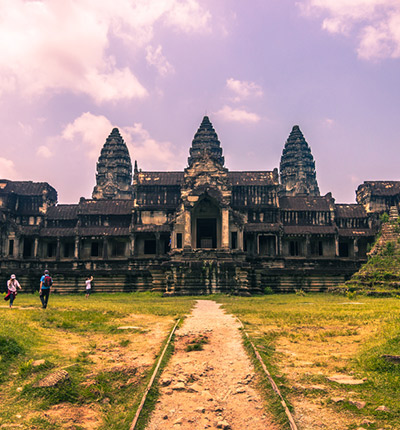
Angkor Wat combines two basic plans of Khmer temple architecture: the temple-mountain and the later galleried temple. It is designed to represent Mount Meru, home of the devas in Hindu mythology: within a moat and an outer wall 3.6 kilometres (2.2 mi) long are three rectangular galleries, each raised above the next. At the centre of the temple stands a quincunx of towers. Unlike most Angkorian temples, Angkor Wat is oriented to the west; scholars are divided as to the significance of this. The temple is admired for the grandeur and harmony of the architecture, its extensive bas-reliefs, and for the numerous devatas adorning its walls.
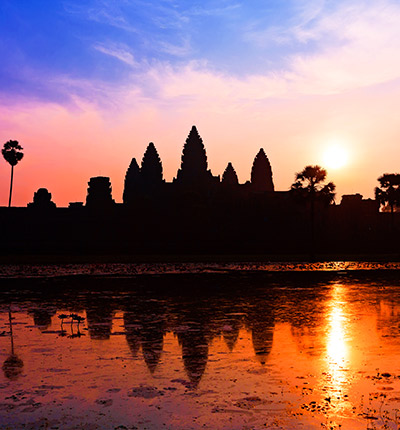
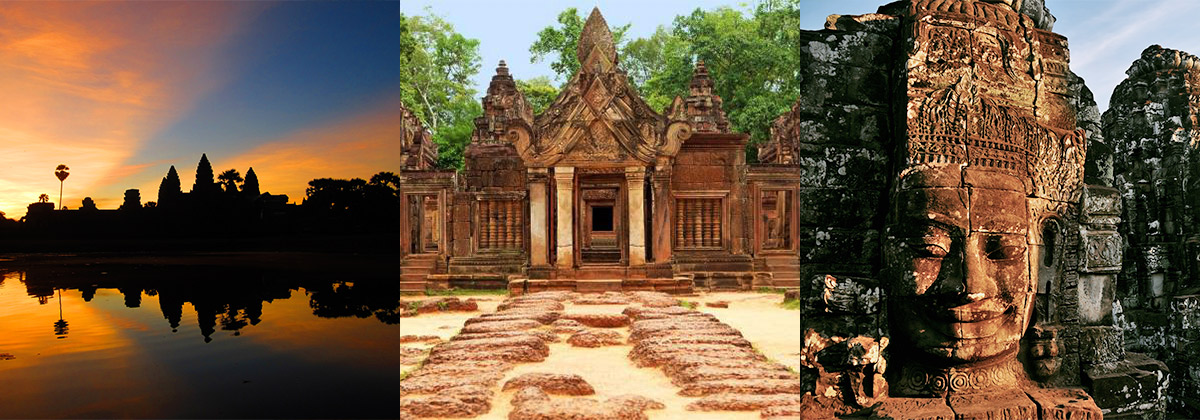
Angkor Wat, in its beauty and state of preservation, is unrivaled. Its mightiness and magnificence bespeak a pomp and a luxury surpassing that of a Pharaoh or a Shah Jahan, an impressiveness greater than that of the Pyramids, an artistic distinctiveness as fine as that of the Taj Mahal. Angkor Wat is located about six kilometers (four miles) north of Siem Reap, south of Angkor Thom. Entry and exit to Angkor Wat can only be access from its west gate.
Angkor Wat was built in the first half of the 12th century (113-5BC). Estimated construction time of the temple is 30 years by King Suryavarman II, dedicated to Vishnu (Hindu), replica of Angkor Thom style of art.
Angkor Wat, the largest monument of the Angkor group and the best preserved, is an architectural masterpiece. Its perfection in composition, balance, proportions, relief's and sculpture make it one of the finest monuments in the world.
Wat is the Khmer name for temple (the French spelling is "vat "), which was probably added to "Angkor "when it became a Theravada Buddhist monument, most likely in the sixteenth century. After 1432 when the capital moved to Phnom Penh, Angkor Wat was cared for by Buddhist monks.
It is generally accepted that Angkor Wat was a funerary temple for King Suryavarman II and oriented to the west to conform to the symbolism between the setting sun and death. The bas-reliefs, designed for viewing from left to right in the order of Hindu funereal ritual, support this function.
Angkor Wat (Khmer: អង្គរវត្ត or "Capital Temple") is a temple complex in Cambodia and the largest religious monument in the world, with the site measuring 162.6 hectares (1,626,000 m2; 402 acres).[1] It was originally constructed as a Hindu temple of god Vishnu for the Khmer Empire, gradually transforming into a Buddhist temple toward the end of the 12th century. It was built by the Khmer King Suryavarman II in the early 12th century in Yaśodharapura (Khmer: យសោធរបុរៈ, present-day Angkor), the capital of the Khmer Empire, as his state temple and eventual mausoleum. Breaking from the Shaiva tradition of previous kings, Angkor Wat was instead dedicated to Vishnu. As the best-preserved temple at the site, it is the only one to have remained a significant religious center since its foundation. The temple is at the top of the high classical style of Khmer architecture. It has become a symbol of Cambodia,[4] appearing on its national flag, and it is the country's prime attraction for visitors.
Angkor Wat combines two basic plans of Khmer temple architecture: the temple-mountain and the later galleried temple. It is designed to represent Mount Meru, home of the devas in Hindu mythology: within a moat and an outer wall 3.6 kilometres (2.2 mi) long are three rectangular galleries, each raised above the next. At the centre of the temple stands a quincunx of towers. Unlike most Angkorian temples, Angkor Wat is oriented to the west; scholars are divided as to the significance of this. The temple is admired for the grandeur and harmony of the architecture, its extensive bas-reliefs, and for the numerous devatas adorning its walls.
Angkor Wat lies 5.5 kilometres (3.4 mi) north of the modern town of Siem Reap, and a short distance south and slightly east of the previous capital, which was centred at Baphuon. In an area of Cambodia where there is an important group of ancient structures, it is the southernmost of Angkor's main sites.
According to legend, the construction of Angkor Wat was ordered by Indra to act as a palace for his son Precha Ket Mealea. According to the 13th century Chinese traveler Daguan Zhou, it was believed by some that the temple was constructed in a single night by a divine architect.
The initial design and construction of the temple took place in the first half of the 12th century, during the reign of Suryavarman II (ruled 1113 – c. 1150). Dedicated to Vishnu, it was built as the king's state temple and capital city. As neither the foundation stela nor any contemporary inscriptions referring to the temple have been found, its original name is unknown, but it may have been known as "Varah Vishnu-lok" after the presiding deity. Work seems to have ended shortly after the king's death, leaving some of the bas-relief decoration unfinished.[9] In 1177, approximately 27 years after the death of Suryavarman II, Angkor was sacked by the Chams, the traditional enemies of the Khmer. Thereafter the empire was restored by a new king, Jayavarman VII, who established a new capital and state temple (Angkor Thom and the Bayon respectively) a few kilometers to the north.
Toward the end of the 12th century, Angkor Wat gradually transformed from a Hindu center of worship to Buddhism, which continues to the present day. Angkor Wat is unusual among the Angkor temples in that although it was somewhat neglected after the 16th century it was never completely abandoned, its preservation being due in part to the fact that its moat also provided some protection from encroachment by the jungle.
One of the first Western visitors to the temple was António da Madalena, a Portuguese monk who visited in 1586 and said that it "is of such extraordinary construction that it is not possible to describe it with a pen, particularly since it is like no other building in the world. It has towers and decoration and all the refinements which the human genius can conceive of."
By the 17th century, Angkor Wat was not completely abandoned and functioned as a Buddhist temple. Fourteen inscriptions dated from the 17th century discovered in Angkor area testify to Japanese Buddhist pilgrims that had established small settlements alongside Khmer locals. At that time, the temple was thought by the Japanese visitors as the famed Jetavana garden of the Buddha, which originally located in the kingdom of Magadha, India. The best-known inscription tells of Ukondafu Kazufusa, who celebrated the Khmer New Year at Angkor Wat in 1632.

It is the first Grand Epic show that recreates the Angkor Civilization in all its glorious aspects. Our show takes you on a journey from foundation to prosperity of Angkor and the worldwide famous ...

Prek Toal is one of three biospheres on Tonlé Sap lake, and this stunning bird sanctuary makes it the most worthwhile and straightforward of the three to visit. It is an ornithologist’s fantasy, ...
After your arriving at Siem Reap, take two days to explore the splendid temples in Angkor Wat and Angkor Thom. Then have a boat out to see the largest freshwater lake in Southeast Asia, which swells ...
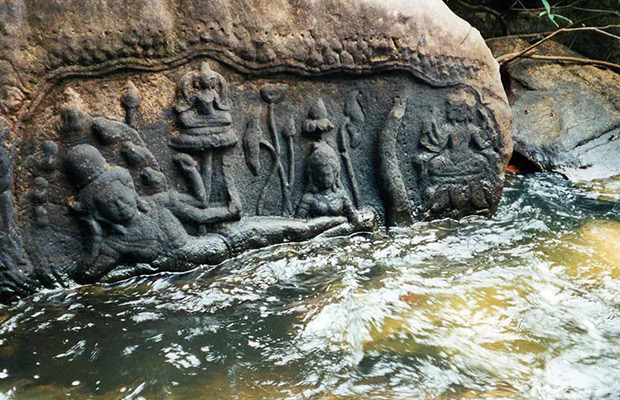
Cambodia's jungle holds a wealth of stunning natural scenery and fascinating ancient history. Led by a private guide, this day-long tour shows you Kbal Spean (“River of a Thousand Lingas), the ...

Experience an enchanting night with unique local cuisine and a charming show of exotic Khmer cultural dancing. As you dine on a delicious Cambodian buffet dinner, be captivated by an Apsara dance ...

6 Days best Cambodia classic holidays in Cambodia arranged by our specialist tour operator, which will take you to the best attractions in Siem Reap and Phnom Penh: Angkor Wat, Tonle Sap Lake, Wat ...

Steung Thmey village, Svay Dangkum commune, Siem Reap, Cambodia
Best Seller!
Angkor Pal Boutique Hotel is located in Siem Reap only 600 m away from the vibrant Pub Street. The hotel welcomes guests with an outdoor swimming pool, spacious outdoor terrace and free WiFi access.
Angkor Pal Boutique Hotel is only 6.6 km from the famous Angkor Wat – a UNESCO World Heritage Site. Angkor Night Market is just 300 m away while Siem Reap - Angkor International Airport is 7 km from the property.
Rooms are modern and bright. Each is fitted with air conditioning, a minibar and windows offering natural light. The en suite bathroom will provide you with a shower and a hairdryer. All rooms enjoy views of the bustling city.
Staff at this charming getaway will be happy to assist you with luggage storage and free parking facilities. A 24-hour front desk can arrange for traditional massages and soothing spa treatments can be enjoyed on-site.
Unwind with a refreshing glass of beer at the bar or sample a tasty Cambodian-style meal at the in-house restaurant. Room service options are possible.
This is our guests' favourite part of Siem Reap, according to independent reviews.
Couples particularly like the location — they rated it 8.6 for a two-person trip.
We speak your language!

Charles de Gaulle Blv, Khum Svay Dan Kum, Siem Reap, Cambodia
Best Value!
Raffles Grand Hotel d'Angkor offers elegant accommodation in the heart of Siem Reap, within a 5-minute drive of the market centre. It features a lap pool, fitness centre, and spa. WiFi is free throughout the hotel.
Raffles Grand Hotel is a 10-minute drive from both Angkor Wat and Siem Reap International Airport. It is also close to numerous temples.
Featuring private terraces, the air-conditioned rooms come with cable TV, tea/coffee making facilities and a safety deposit box. Each room has an attached bathroom with a bathtub and shower.
Activities offered by Raffles Grand Hotel include yoga and Khmer dance. The hotel provides 24-hour room service and 24-hour butler service.
Raffles Grand Hotel d'Angkor has 4 dining options offering French, Cambodian and Asian dishes.
This is our guests' favourite part of Siem Reap, according to independent reviews.
This property also has one of the best-rated locations in Siem Reap! Guests are happier about it compared to other properties in the area.
Couples particularly like the location — they rated it 9.3 for a two-person trip.
We speak your language!
Phum Veal, Khum Kouk Chak, Siem Reap, Cambodia
Best for Couple!
One of our top picks in Siem Reap – and a guest favorite.
Set in Siem Reap, 1.9 mi from Pub Street, Shintana Saya Residence features a year-round outdoor pool. The resort has a barbecue and views of the garden, and guests can enjoy a drink at the bar. Free WiFi is available throughout the property.
The resort also offers car hire. Angkor Wat is 2.2 mi from Shintana Saya Residence, while Wat Thmei is 0.6 mi from the property. Siem Reap - Angkor International Airport is 3.1 mi away. The property offers complimentary two-way airport transfers.
All rooms include a flat-screen TV with cable channels. Some units have a seating area for your convenience. You will find a kettle in the room. Extras include bathrobes and slippers.
Guests can approach the 24-hour front desk for currency exchange, tour arrangements, ticketing and concierge services. Complimentary use of bicycles are available for guests who wish to explore the surrounding area.
This property also has one of the top-rated locations in Siem Reap! Guests are happier about it compared to other properties in the area.
Couples in particular like the location – they rated it 9.3 for a two-person trip.
This property is also rated for the best value in Siem Reap! Guests are getting more for their money when compared to other properties in this city.
We speak your language!

Street Oum Chhay, Mondul II Village, Svay Dangkum,, Siem Reap, Cambodia
Best Value!
One of our top picks in Siem Reap.Centrally located in the Old French Quarter, Chateau d'Angkor La Residence offers accommodation in Siem Reap. It features an outdoor saltwater swimming pool and guests can enjoy meals at the in-house restaurant. Free WiFi is available throughout the property and complimentary private parking is provided.
The residence is a 10-minute walk to the famous Old Market (Phsar Chas) and the lively Pub Street. It is 200 m to the Royal Residence, while the UNESCO World Heritage Site of Angkor Wat Temple is 6 km away. Siem Reap International Airport is 7 km from the property. Complimentary pickup services from the airport or bus station are available.
Featuring a balcony with views of the city, air-conditioned suites include a separate seating area with sofa and flat-screen satellite TV, a dining area, and a kitchen fully equipped with a fridge and kitchenware. For guests' convenience, an electric kettle, slippers and dental kit are provided in the room. En suite bathrooms come with a hairdryer and free toiletries. A washing machine is available.
Chateau d'Angkor La Residence operates a 24-hour front desk that provides tour arrangements, luggage storage and a business centre. Guests can also indulge in massage treatments. Union Pay is accepted at the property.
The in-house restaurant serves a selection of Cambodian cuisine and Western dishes. Room service is available.
This is our guests' favourite part of Siem Reap, according to independent reviews.
This property also has one of the best-rated locations in Siem Reap! Guests are happier about it compared to other properties in the area.
Couples particularly like the location — they rated it 9.2 for a two-person trip.
This property is also rated for the best value in Siem Reap! Guests are getting more for their money when compared to other properties in this city.
We speak your language!
Nº 498, Salakomroeuk, N/A Siem Reap, Cambodia
Best Location!
One of our top picks in Siem Reap.
Sala Lodges provides accommodation in authentic traditional Khmer-style wooden houses on stilts away from the hustle and bustle of Siem Reap. It features a saltwater swimming pool equipped with a poolside bar overlooking panoramic views. Free WiFi is available throughout the property.
The vibrant Pub Street, Old Market and Angkor Night Market are conveniently about 1.6 km away. Sala Lodges Siem Reap is located 9 km from Siem Reap International airport and 8 km from Angkor Wat Temple. Wat Damnak Pagoda is a 5-minute walk from the hotel. The Resident Royal Palace, the Post Office and the Angkor National Museum are a 15-minute walk away.
Each house offers an individual history, with the oldest house dating back to the late 1950s. Houses are decorated with artisan art pieces, with carefully-restored furnishings. Rooms are fully air-conditioned with a fan option and feature a private balcony. The seating area is equipped with a safe and a minibar. En suite bathrooms include a hairdryer and free toiletries.
Guests can approach the 24-hour front desk for currency exchange, tour arrangements, ticketing and concierge services. Complimentary use of bicycles are available for guests who wish to explore the surrounding area.
The Sala Lodge Restaurant serves Khmer (local) dishes, as well as, Western dishes. The pool bar serves a selection of refreshing beverages.
This is our guests' favourite part of Siem Reap, according to independent reviews.
This property also has one of the best-rated locations in Siem Reap! Guests are happier about it compared to other properties in the area.
Couples particularly like the location — they rated it 9.3 for a two-person trip.
This property is also rated for the best value in Siem Reap! Guests are getting more for their money when compared to other properties in this city.
We speak your language!
Road No. 6, Salakanseng Village, Svay Dangkum Commnune, Siem Reap, Cambodia
Best for Traveller!
Housing a restaurant with views of the outdoor pool, Cambana d'Angkor Suites offers peaceful and elegant accommodation with free WiFi access throughout the property. It is conveniently 1 km from Angkor National Museum and 1.5 km from Pub Street. The property offers free airport pick-up.
With a blend of Cambodian and French traditional-styled furnishings, air-conditioned rooms come with a wardrobe, in-room safe, a flat-screen satellite/cable TV, minibar and electric kettle. The en suite bathroom includes a separate shower facility and hot tub, hairdryer and free toiletries.
At Cambana d'Angkor Suites, guests can enjoy a relaxing massage at the spa. Operating a 24-hour front desk, the friendly staff can assist with laundry services, bicycle/car rentals and tour arrangements. Tour arrangements are available at the hospility desk.
The in-house restaurant serves a delectable spread of local and Western cuisine. Special diet dishes can also be prepared upon request, while after-meal drinks are offered at the bar.
ATM/cash machines are located just next door to the property. Situated just a 5-minute drive from downtown, the property is 8 km from the UNESCO World Heritage Site of Angkor Wat. Siem Reap International Airport is 6 km away.
This is our guests' favourite part of Siem Reap, according to independent reviews.
Couples particularly like the location — they rated it 8.8 for a two-person trip.
This property is also rated for the best value in Siem Reap! Guests are getting more for their money when compared to other properties in this city.
We speak your language!
Being the locals, we know the true value of our land. We always listen and arrange everything as your desire. Please kindly send us whatever about your trip,we will send you best offers quickly.






Guest Name: Mr. José Monteiro
Country: Brazil
City: Rio de Janeiro
N.of Person: Hotel lotus blanc resort angkor pax
Travel date: 2026-11-28
Booked: Angkor Stunning Hot Air Balloon
Tour Style: Tour Activities
Duration: 30 Mins