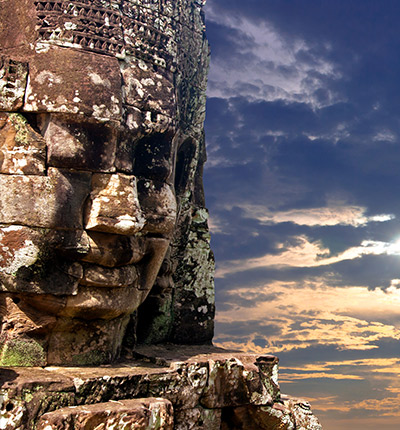
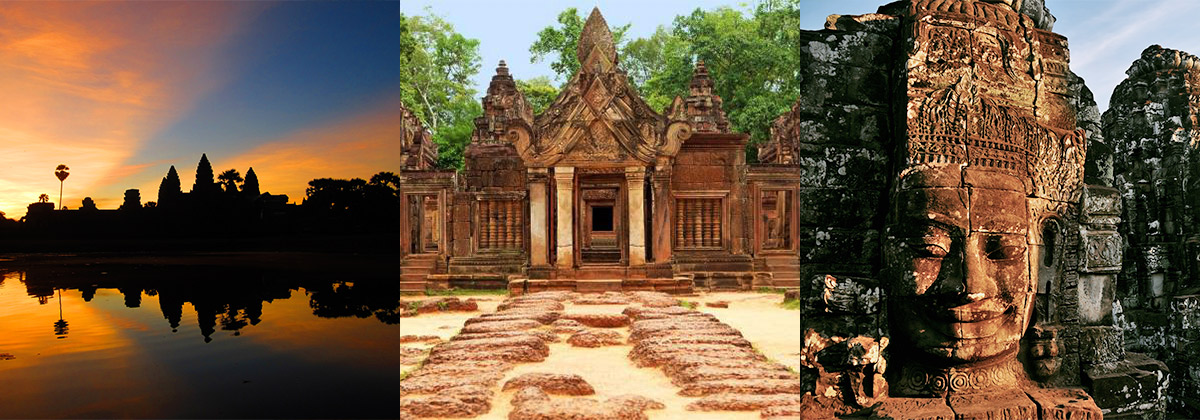
Angkor Thom: Large temple-mountain in Angkor Thom. Recently reopened after an extensive and troubled restoration. The project began in the early 1970s with archaeologists dismantling much it, but abandoned in 1975 due the war. The records were lost during the war years, leaving an enormous jigsaw puzzle of rock. The restoration restarted in the 1990s and the temple finally reopened in 2011. Note the unique animal carvings at the walkway entrance. Similar carvings are visible on West Mebon. Also note the impressively large reclining Buddha on the west side, which was added to the temple in the 16th century.
The Baphuon (Khmer: ប្រាសាទបាពួន) is a temple at Angkor, Cambodia. It is located in Angkor Thom, northwest of the Bayon. Built in the mid-11th century, it is a three-tiered temple mountain:103 built as the state temple of Udayadityavarman II : 103 dedicated to the Hindu God Shiva. It is the archetype of the Baphuon style. The temple adjoins the southern enclosure of the royal palace and measures 120 metres east-west by 100 metres north-south at its base and stands 34 meters tall without its tower, which would have made it roughly 50 meters tall. Its appearance apparently impressed Temür Khan's late 13th century envoy Chou Ta-kuan during his visit from 1296 to 1297, who said it was 'the Tower of Bronze...a truly astonishing spectacle, with more than ten chambers at its base.' In the late 15th century, the Baphuon was converted to a Buddhist temple. A 9 meter tall by 70 meter long statue of a reclining Buddha was built on the west side's second level, which probably required the demolition of the 8 meter tower above, thus explaining its current absence. The temple was built on land filled with sand, and due to its immense size the site was unstable throughout its history. Large portions had probably already collapsed by the time the Buddha was added.
Surrounded by a wall 125 by 425 m the central tower was probably gilded wood, which has not survived.
By the 20th century, much of the temple had largely collapsed, and restoration efforts have since proven problematic: a first effort begun in 1960 was interrupted by the coming to power of the Khmer Rouge, and records of the positions of the stones were lost. A second attempt started in 1995 by a team of French-led archeologists as of 2005 was still ongoing, restricting visitor access. As of November 2010, partial visitor access was once again allowed, though not to the central structure.
In April 2011, after 51 years, the archaeologists finished the restoration of the temple. King Norodom Sihamoni of Cambodia and Prime Minister Francois Fillon of France were among those who first toured the renovated temple during the inauguration ceremony on July 3, 2011.
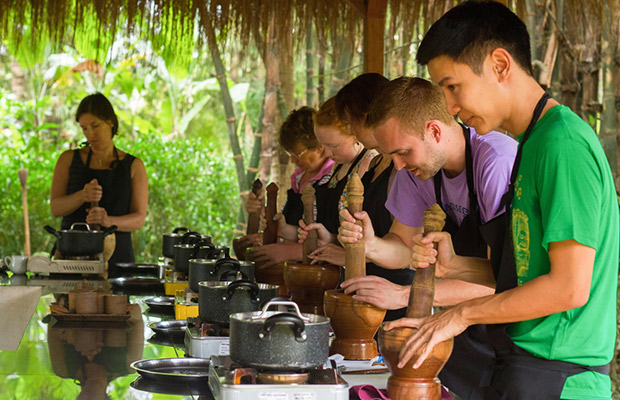
Few visitors to Cambodia witness rural Khmer life in such details, let alone enjoy this level of one-to-one time with a Cambodian Family in their own home. Our unique' village explorer' trip not only ...

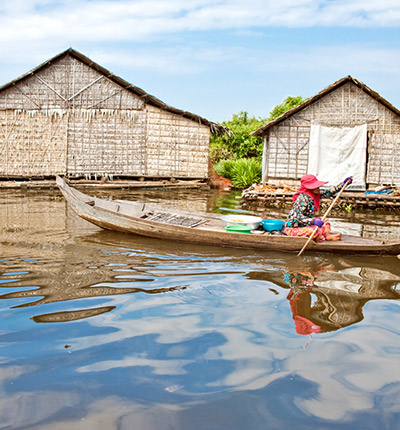
Kayaking through the Tonle Sap Lake’s mangrove forest, floating villages, and open lake waters. Learn about villagers who live in floating ...
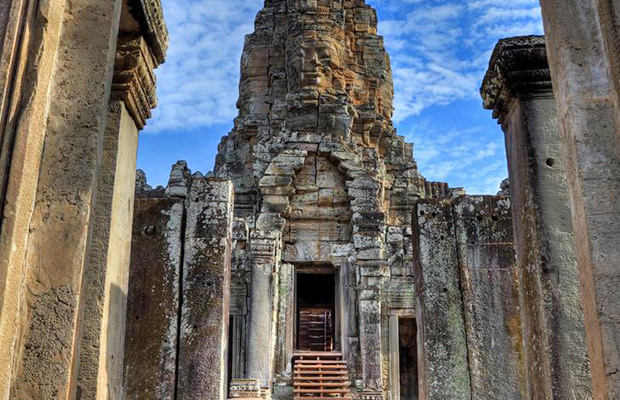
With charming Siem Reap serving as your gateway to the temples of the ancient Khmer Empire, explore Angkor Wat and Angkor Thom, as well as the jungle ruins of Ta Prohm and Banteay Srei. Spend your ...
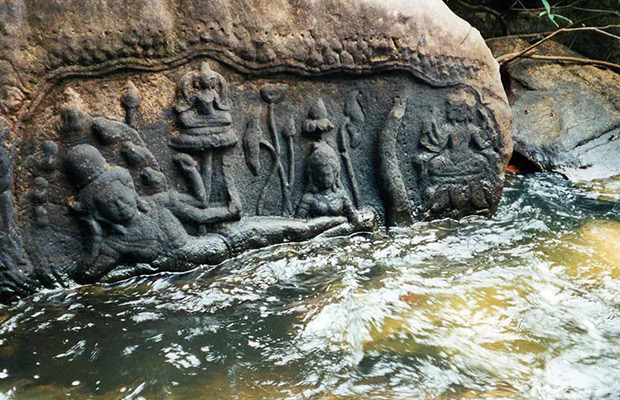
Cambodia's jungle holds a wealth of stunning natural scenery and fascinating ancient history. Led by a private guide, this day-long tour shows you Kbal Spean (“River of a Thousand Lingas), the ...

Explore where Cambodia's ancient history and contemporary charm intersect on a private tour to glimpse the very best of the ruins in Siem Reap. Travel to Angkor Thom, Ta Prohm, and Angkor Wat and ...

Off bike to see Organic Fruit Farm in the jungle & Free tasting seasonal fruit. Bike to see Ta Prom one of the marvelous university temples in ancient time or "The Tomb Raider or the root ...

Road to Banteay Srei Temple, Siem Reap, Cambodia
Best Seller!
This traditional Cambodian homestay offers free bicycle rentals and a free airport or bus station pick-up service. Located in San Day Village, it allows guests to pick fruit from its gardens for free. It also has free wired internet and a restaurant.
Built from wood, rooms at Bong Thom Homestay feature bamboo furnishings, a free welcome fruit basket and a fan. A mosquito net and private bathroom with hot-water showers are included.
Bong Thom Homestay is a 15-minute drive from the famous Angkor Wat and a 20-minute drive from Siem Reap Town. It is a 25-minute drive from Siem Reap Airport.
Cooking classes, ox cart village tours and car rentals can be arranged. Guests can also fish at the on-site fishing pond at an extra charge. Laundry services and a 24-hour front desk are available.
The open-air restaurant serves traditional Khmer dishes, as well as Western food on request. A daily breakfast is also offered here.
We speak your language!

Located in Old Market areas, Pub street and Night Market, Siem Reap, Cambodia
Best Deal!
One of our best sellers in Siem Reap!
Conveniently located in Old Market Area, La Villa du Bonheur offers elegant and comfortable accommodations with free WiFi access in the entire property. Operating a 24-hour front desk, it features free parking and a free pick-up from the airport and bus station.
The hotel is only 500 m from the lively Pub Street and 300 m from Artisans D'Angkor. The UNESCO World Heritage Site of Angkor Wat is 4.3 mi away, while Siem Reap International Airport is accessible within an 5 mi drive.
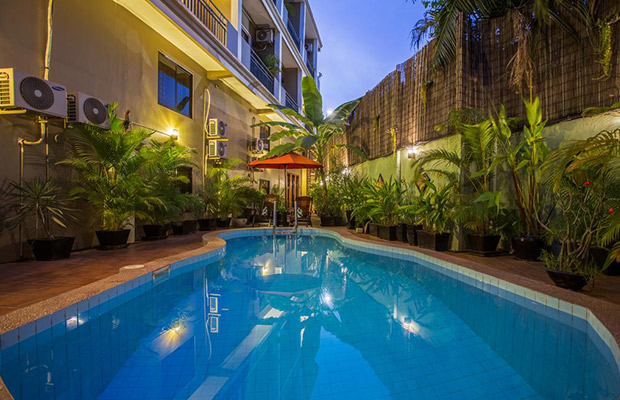
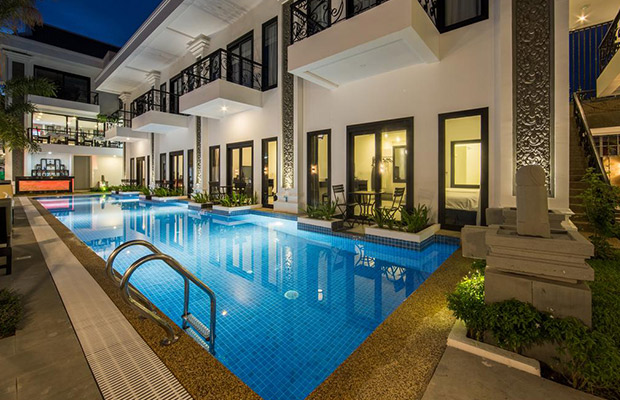
Offering garden/pool views from the balcony, air-conditioned rooms come with a desk, wardrobe, electric kettle and a flat-screen TV with satellite channels. The private bathroom has a bathtub or shower, hairdryer, bathrobes and slippers.
Friendly staff at La Villa du Bonheur can assist guests with bicycle/car rentals, luggage storage, laundry and concierge services. Airport transfers can also be arranged upon request at a surcharge. Daily housekeeping service is available.
The in-house alfresco restaurant serves an appetizing selection of local and Western dishes. After-meal drinks can be enjoyed at the bar.
This is our guests' favorite part of Siem Reap, according to independent reviews.
This property also has one of the top-rated locations in Siem Reap! Guests are happier about it compared to other properties in the area.
Couples in particular like the location – they rated it 9.2 for a two-person trip.
We speak your language!

7 Makara, Wat Damnak, Salakamruek, Siem Reap, Cambodia
Best for Traveller!
Showcasing an outdoor pool and year-round outdoor pool, Central Privilege Hotel is located in Siem Reap, just half a kilometer from Pub Street. The hotel has a barbecue and sun terrace, and guests can enjoy a meal at the restaurant or a drink at the bar. Free private parking is available on site.
Certain units feature a sitting area to relax in after a busy day. A terrace or balcony are featured in certain rooms. The rooms are equipped with a private bathroom equipped with a shower. For your comfort, you will find bathrobes and slippers. A flat-screen TV is featured.
There is a 24-hour front desk at the property.
You can play ping-pong at this hotel, and bike rental and car rental are available. Angkor Wat is 6.9 km from Central Privilege Hotel, and Angkor Trade Centre is 600 m from the property. The nearest airport is Angkor International Airport, 8 km from Central Privilege Hotel.
This is our guests' favorite part of Siem Reap, according to independent reviews.
This property also has one of the top-rated locations in Siem Reap! Guests are happier about it compared to other properties in the area.
This property is also rated for the best value in Siem Reap! Guests are getting more for their money when compared to other properties in this city.
We speak your language!
Central Privilege Hotel has been welcoming Booking.com guests since Jul 6, 2016
Hotel Rooms: 49
Taphul Road, Taphul Village, Sangkat Svay Dangkum, Siem Reap, Cambodia
Best for Traveller!
One of our bestsellers in Siem Reap!
Located in Siem Reap and with Royal Residence reachable within less than 1 km, Aroma Angkor Boutique Hotel provides express check-in and check-out, non-smoking rooms, an outdoor swimming pool, free WiFi and a garden. The property features a bar, as well as a restaurant serving American cuisine. The accommodation features a 24-hour front desk, room service and currency exchange for guests.
Guest rooms at the hotel include air conditioning, a flat-screen TV with satellite channels, DVD Player, and a private bathroom with a bath, a hair dryer and free toiletries. All rooms will provide guests with a desk and a kettle.
Continental and American breakfast options are available daily at Aroma Angkor Boutique Hotel.
You can play billiards at the accommodation, and bike hire and car hire are available.
Aroma Angkor Boutique Hotel provides an ironing service, as well as business facilities like fax and photocopying.
Popular points of interest near the hotel include Angkor Night Market, Pub Street and Angkor Trade Centre. The nearest airport is Siem Reap - Angkor International, 12 km from Aroma Angkor Boutique Hotel, and the property offers a free airport shuttle service.
This is our guests' favourite part of Siem Reap, according to independent reviews.
This property also has one of the best-rated locations in Siem Reap! Guests are happier about it compared to other properties in the area.
Couples particularly like the location — they rated it 9.4 for a two-person trip.
This property is also rated for the best value in Siem Reap! Guests are getting more for their money when compared to other properties in this city.
We speak your language!
Street 26, Wat Bo Village, Sangkat Salakamroeuk. , Siem Reap, Cambodia
Best for Couple!
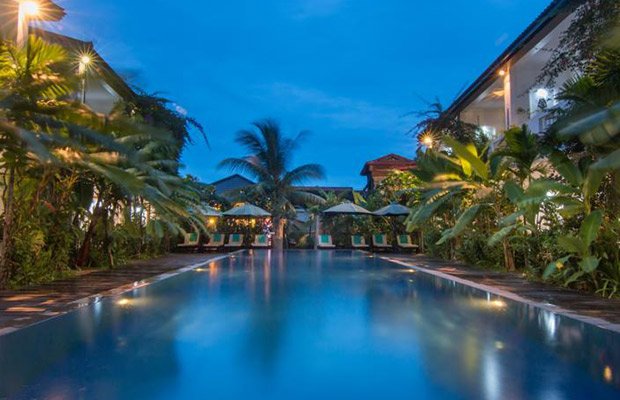
Located in a tropical setting, La Residence WatBo offers an outdoor pool and restaurant. Featuring air-conditioned rooms with pool views and free WiFi, the property provides a free pick-up from the airport.
La Residence WatBo is a 15-minute drive from Siem Reap International Airport. It takes 15 minutes to walk to the Night Market and Pub Street. Wat Bo Temple is 400 m away while Siem Reap River is 700 m from the property. The nearest airport, Siem Reap International Airport is 9.4 km away. The property offers complimentary airport pickup services upon request.
All rooms come with a flat-screen cable TV, safe, minibar and tea/coffee making facilities. Private bathroom includes a bathtub, shower, hairdryer and free toiletries.
At La Residence WatBo you will find a 24-hour front desk and garden. Other facilities offered include a ticket service, tour desk and luggage storage.
Overlooking the garden and pool is the outdoor restaurant, which serves traditional Cambodian cuisine and international dishes.
This is our guests' favourite part of Siem Reap, according to independent reviews.
This property is also rated for the best value in Siem Reap! Guests are getting more for their money when compared to other properties in this city.
We speak your language!
Next to Angkor Night Market, Siem Reap, Cambodia
Best Location!
Situated 300 m from Pub Street in Siem Reap, Onederz Hostel Siem Reap features free WiFi access and free private parking. Guests can enjoy the on-site restaurant or relax at the two swimming pools, one located on the rooftop where view of the sunset can be admired.
Featuring both private rooms and dormitories, each unit at Onederz Hostel Siem Reap comes with air conditioning. Guests staying in dormitory rooms will find electric socket, reading lamp and accessory case in each bed. Some rooms offer an electric kettle. A flat-screen TV is featured.
You will find a 24-hour front desk at the property. Union Pay is accepted here.
King's Road Angkor is 600 m from Onederz Hostel Siem Reap, while Angkor Wat is 6 km away. Siem Reap - Angkor International Airport is 7 km from the property.
This is our guests' favourite part of Siem Reap, according to independent reviews.
This property also has one of the best-rated locations in Siem Reap! Guests are happier about it compared to other properties in the area.
Couples particularly like the location — they rated it 9.7 for a two-person trip.
This property is also rated for the best value in Siem Reap! Guests are getting more for their money when compared to other properties in this city.
We speak your language!

Being the locals, we know the true value of our land. We always listen and arrange everything as your desire. Please kindly send us whatever about your trip,we will send you best offers quickly.





Guest Name: Mr. José Monteiro
Country: Brazil
City: Rio de Janeiro
N.of Person: Hotel lotus blanc resort angkor pax
Travel date: 2026-11-28
Booked: Angkor Stunning Hot Air Balloon
Tour Style: Tour Activities
Duration: 30 Mins