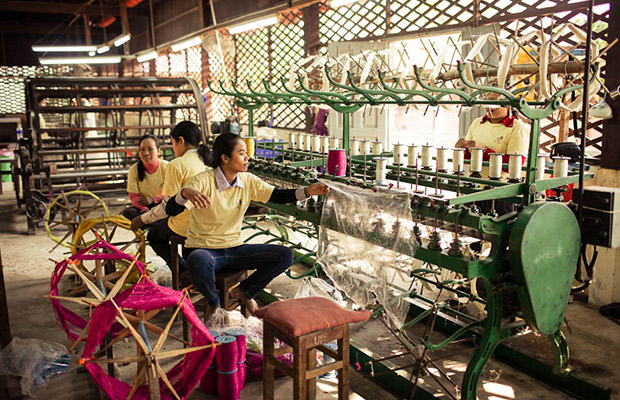
Angkor Silk Farm was created by the National Silk Centre (Centre National de la Soie - CNS) in 1993. Between 1994 and 1996, the National Silk Centre developed and grew bigger. While the National Silk Centre has focused on training silk farming to young Cambodian from remote rural areas, Artisans Angkor has provided these trainees ...
Templed-out? You won’t have been the first person to have been overwhelmed by the number of Angkorian ruins to take in. Angkor Silk Farm is just one of the antidotes available to help balance out the historical with the contemporary — it costs nothing at all to visit and we found it surprisingly fascinating.
Angkor Silk Farm is a site gathering many silk workshops belonging to the Cambodian social enterprise Artisans Angkor. Visitors can discover through free guided tours the complete process of sericulture, from the cultivation of the mulberry bushes to the production of silk goods.
Angkor Silk Farm is located in Puok District, a 20-minute drive from Siem Reap centre, Cambodia.
Part of Artisans Angkor, a social business best known for its artisan workshop and high-end shop in central Siem Reap — worth a half hour of your time to visit in its own right — the silk farm shows you how the silk behind those beautiful silk wares is produced. You can take a free shuttle from Artisans Angkor departing at 09:30 or 13:30 or hop in a tuk tuk for the 20-minute ride out of town to the working silk farm near Puok district.
Angkor Silk Farm was created by the National Silk Centre (Centre National de la Soie - CNS) in 1993. Between 1994 and 1996, the National Silk Centre developed and grew bigger.
While the National Silk Centre has focused on training silk farming to young Cambodian from remote rural areas, Artisans Angkor has provided these trainees with employment at the end of their formation. Indeed, there were few opportunities in this sector in the mid-1990s and Artisans Angkor was founded to become a vocational organism for people trained by the National Silk Centre. Therefore, CNS hosts Artisans Angkor at Angkor Silk Farm and both work closely together.
Since its creation, Artisans Angkor has opened 23 silk workshops in Siem Reap province which makes it the largest employer of the region. Besides fulfilling a social mission, the enterprise is renowned as one of the finest silk producers in Cambodia and Angkor Silk Farm has been one of the great attractions of Siem Reap for visitors eager to discover the secrets of handmade silk production.
Angkor Silk Farm is surrounded by 5 hectares of mulberry trees plantation. These fields are the starting point of the whole process of silk-making as silk worms will eat and grow on them. The trees can grow two meters tall and branches are cut four times a year. Mulberry leaves are silkworms' favourite food and will be eaten for weeks. During the last days, silkworms can eat ten times a day.
When the worms have grown enough, they are put in baskets. From there, they will spin their cocoons in five days and will produce about three hundreds meters of silk each. The cocoons are then put in sunlight to avoid them undergoing their metamorphosis into mature moths. However, 20% of them reach the breeding process and the female moths will lay and hatch its eggs within nine to twelve days.
The cocoons are soaked in hot water in order to soften the sericin (also known as silk gum) which coat the fibres and stick the cocoons together. Silk threads are then unwound and reeled together to produce a single thread. Weavers at Angkor Silk Farm make both raw silk and fine silk that do not have the same texture at all. Sericin has not been completely removed from raw silk threads, which will give a rougher texture to the fabric at the end.
The silk is then dyed by putting natural materials or artificial and environmentally friendly dyes in boiling water. Natural dyes can be created out of bananas, coconut barks, leaves, roots, etc. but fruits and trees don't always have the same hues depending on the seasons which make the use of artificial products necessary to reach the same colour. The dyeing process has to be renewed several times as artisans weave silk fabrics in the old way through the Ikat technique.
The Ikat technique (also called "chong kiet" in Khmer) is one of the most ancient weaving techniques in the world and is used to create designs in fabrics. Artisans create a tight knot resistant to dyes which forms an original pattern with the complex intertwining of the warp thread and the weft thread.
One of the most famous and gorgeous kind of silk fabrics in Cambodia is called "Hol Lboeuk" and can only be created with the Ikat technique. Successive tying-in and dyeing process with different colours will yield the fabric geometric or floral motifs.
The threads are then tied-up to a frame. The warp chain will individually pass through dents of the reed to be rolled up again on the cylinder placed in front of the loom. In the meantime, the weaver alternately pedal up and down on the levers to overhang the frame, and to provide the route for the shuttle that carries the weft threads to move from right to left. After each passage of the shuttle, the reed will join and tighten the threads together to make the full fabric. This lengthy and time-consuming process creates the desired pattern.
Take in some of the most stunning sites around Angkor as you follow the Angkor Grand Circuit, laid by the French in the 20th century, and take beautiful pictures of tree-clad temples, colorful ...
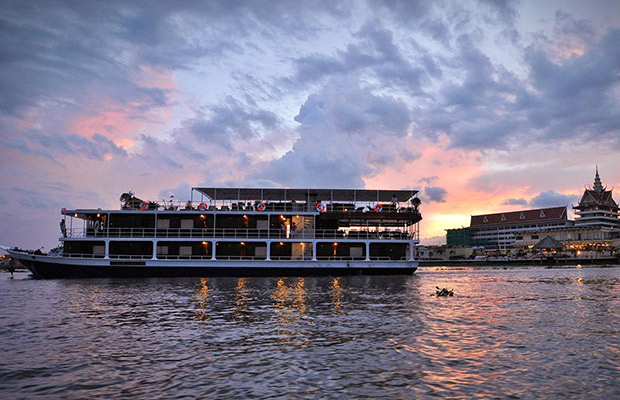
Cruise up the river from Phnom Penh to Prek Kdam or Roka Kaong (depending on weather conditions) in a luxury cruiser, the Mekong Tara Prince. Then transfer to a luxury, private ,air-conditioned ...

Are you looking for Cambodia Romantic honeymoon tour package? We offer you the perfect and exotic honeymoon tour in Cambodia. Rates include luxurious hotels, daily breakfast, site seeing permits to ...

Off bike to see Organic Fruit Farm in the jungle & Free tasting seasonal fruit. Bike to see Ta Prom one of the marvelous university temples in ancient time or "The Tomb Raider or the root ...

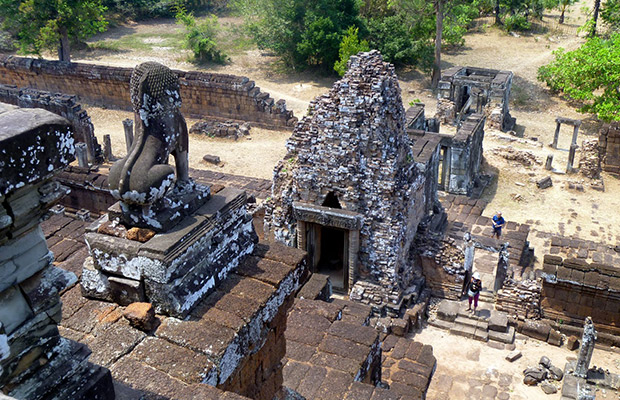
Start off your day easy with the small and charming Pre Rup Temple. Next up, you’ll visit the highly-intricate pink coloured Banteay Srei Temple – which translates beautifully to “The ...

This full day Angkor Temple Hunting is designed for people who would like to see the temples in different way. The pick up and drop off from your hotel is included. Only 3km from Siem Reap city ...

Street 26,Wat Bo Village,Salakomreuk Commune,, Siem Reap, Cambodia
Best Seller!
One of our bestsellers in Siem Reap!
Manjula Villa offers contemporary-style air-conditioned accommodations in Siem Reap. Free WiFi is available throughout the property.
Located in Siem Reap, Manjula Villa is 600 m from the Angkor Trade Centre, 700 m from the Old Market and 800 m from Pub Street. Angkor Wat is 6.6 km away while Siem Reap - Angkor International Airport is 8 km from the property. The property offers complimentary pickup or drop off services from/to the property.
Each room features a flat-screen cable TV, safe, minibar and an electric kettle. Private bathroom comes with a bath, shower, hairdryer, bathrobe and free toiletries.
Guests have complimentary use of the property's bicycles to explore the surrounding area.
This is our guests' favourite part of Siem Reap, according to independent reviews.
Couples particularly like the location — they rated it 8.7 for a two-person trip.
This property is also rated for the best value in Siem Reap! Guests are getting more for their money when compared to other properties in this city.
We speak your language!
545 Airport Road No. 6, Siem Reap, Cambodia
Best Location!
Located only a minute's walk from the Angkor Market and a 3-minute drive by Tuk Tuk to the vibrant Pub Street, Memoire Siem Reap Hotel features an outdoor swimming pool and a fitness center. Guests can enjoy meals at the in-house restaurant or have a drink at the Artist Lounge. Free WiFi is available throughout the property and there is free parking on-site.
Memoire Siem Reap Hotel is a short 10-minute drive from Siem Reap-Angkor International Airport and the famous Angkor Wat. The property offers complimentary airport transfer services.
Fitted with tiled flooring and traditional Khmer decor, rooms are painted with color choices infusing the local charm. Every room is equipped with a satellite TV and a mini-bar. Some rooms come with a private balcony overlooking the pool.
Memoire Siem Reap Hotel's restaurant serves a selection of local and Western dishes. For those who would like to dine in, room service is available.
Transport rentals are provided at the property. For convenience, the front desk opens 24 hours. Memoire Siem Reap Hotel's tour desk offers assistance with visits to local attractions. Guests may make use of the business center, or relax with a massage. Alternatively, they can visit the souvenir shop to buy gifts for their loved ones.
This is our guests' favorite part of Siem Reap, according to independent reviews.
Couples in particular like the location – they rated it 9.1 for a two-person trip.
This property is also rated for the best value in Siem Reap! Guests are getting more for their money when compared to other properties in this city.
We speak your language!

City Center, Oknha Oum Chhay Street, Siem Reap, Cambodia
Best Location!
Located in the heart of Siem Reap, Somadevi Residence is 600 m from the vibrant Pub Street and Old Market. It features an outdoor swimming pool and a fitness centre. Free WiFi is available in all rooms.
Somadevi is 400 m from Royal Residence, and 6 km from the UNESCO Heritage-listed Angkor Wat. Siem Reap-Angkor International Airport is 7 km away. The property offers complimentary two-way airport transfer services.
Fitted with a balcony, each spacious room features satellite TV, a personal safe, an electric kettle and a minibar. The large bathroom offers shower facilities, a bathtub, toiletries and a hairdryer. Bathrobes and slippers are included.
Guests can approach the 24-hour front desk for tour arrangements, luggage storage, laundry and transport services. The property offers bicycle, car or Tuk Tuk rentals for guests who wish to explore the surrounding area. Alternatively, guests can relax in the sauna, or make an appointment at the salon. The property also has a business centre and a souvenir shop.
The in-house restaurant serves up a variety of authentic Khmer dishes as well as Asian and Western cuisine. Special meals can be prepared on request.
This is our guests' favourite part of Siem Reap, according to independent reviews.
This property also has one of the best-rated locations in Siem Reap! Guests are happier about it compared to other properties in the area.
Solo travellers particularly like the location — they rated it 9.7 for a one-person stay.
This property is also rated for the best value in Siem Reap! Guests are getting more for their money when compared to other properties in this city.
We speak your language!
Wat Bo Street, Khum Slokram, Siem Reap, Cambodia
Best for Traveller!
One of our bestsellers in Siem Reap!
Conveniently placed just a 2-minute walk to Resident Royal Palace, Borann, l’Auberge des Temples houses a salt water swimming pool and a restaurant. Guests will also enjoy free WiFi access at all areas.
Located just a 2-minute walk to Angkor National Museum, the property is also a 10-minute walk to Pub Street and the popular Old Market. Siem Reap International Airport is 8 km away. The property offers complimentary airport pickup services.
Featuring a balcony overlooking the poolside, Air-conditioned rooms are fitted with a writing desk, a seating area and a wardrobe. The en suite bathroom includes hot/cold shower facilities and free toiletries.
Getting around the city is easy with car and bicycle rentals. Guests can also enjoy complimentary use of the business centre. Other facilities include a 24-hour front desk and airport shuttle services at a surcharge.
Featuring an outdoor concept, Borann Restaurant will serve traditional Khmer and Western dishes.
This is our guests' favourite part of Siem Reap, according to independent reviews.
Couples particularly like the location — they rated it 8.8 for a two-person trip.
This property is also rated for the best value in Siem Reap! Guests are getting more for their money when compared to other properties in this city.
We speak your language!

No. 0271, Street 27, Wat Bo Road, Wat Bo Village, Siem Reap, Cambodia
Best for Couple!
Nestled within private gardens, Ladear Angkor Boutique offers elegant and comfortable accommodation away from the hustle and bustle of Siem Reap. It features an outdoor swimming pool and guests can enjoy meals at the in-house restaurant or have a drink at the bar. Free WiFi is available throughout the property.
The property is just 800 m from Angkor Trade Centre and 1.3 km from the vibrant Pub Street. The Angkor Wat temple complex is 6.7 km away, while Siem Reap International Airport is accessible within a 9 km drive. The property offers complimentary airport pickup services.
Offering views of the pool, air-conditioned rooms come with tiled flooring, a clothes rack, in-room safe, a minibar, flat-screen TV and sofa seating area. The en suite bathroom includes towels and shower facility.
Guests can approach the 24-hour front desk for currency exchange, tour arrangements, concierge and ticketing services. The property offers complimentary use of bicycle for guests who wish to explore the surrounding area. At Ladear Angkor Boutique, guests can indulge in massage treatments at the spa or relax with a drink at the sun deck.
Housing a restaurant, the property serves a tasty selection of local dishes.
This is our guests' favorite part of Siem Reap, according to independent reviews.
This property is also rated for the best value in Siem Reap! Guests are getting more for their money when compared to other properties in this city.
We speak your language!
Ladear Angkor Boutique has been welcoming Booking.com guests since Oct 30, 2014
Hotel Rooms: 12
Phum Wat Bo, Siem Reap, Cambodia
Best for Traveller!
One of our bestsellers in Siem Reap!
Welcoming guests with a salt-water outdoor swimming pool, Areca Angkor Boutique Villa offers free WiFi access throughout the property.
This modern building is located in the heart of the city just 1.5 km to the lively Old Market and Pub Street. The famous Angkor Wat Temple is only 7 km away while Siem Reap International Airport is a 20-minute taxi ride away.
All rooms at Areca Angkor Boutique Villa include a flat-screen cable TV, comfortable seating area and wardrobe. Bathroom facilities are en suite and come with free toiletries.
Areca Angkor provides laundry/ironing and spa services. A 24-hour front desk can assist with car/motorbike/bicycle rental arrangement.
Couples particularly like the location — they rated it 8.6 for a two-person trip.
This property is also rated for the best value in Siem Reap! Guests are getting more for their money when compared to other properties in this city.
We speak your language!

Being the locals, we know the true value of our land. We always listen and arrange everything as your desire. Please kindly send us whatever about your trip,we will send you best offers quickly.






Guest Name: Mrs. Anaïs JAA
Country: France
City: Phnom Penh
N.of Person: 4 pax
Travel date: 2026-10-31
Booked: Kirirom National Park and Eco-Tourism
Tour Style:
Duration: