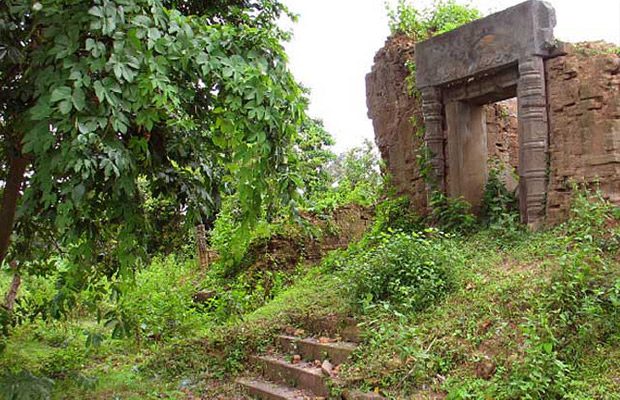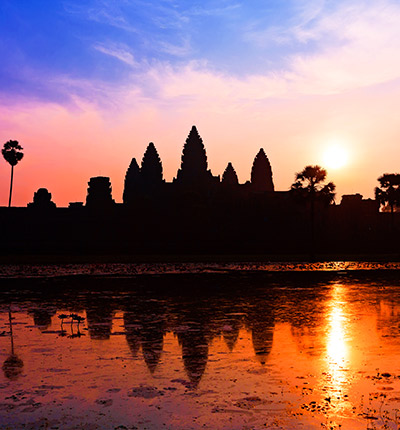
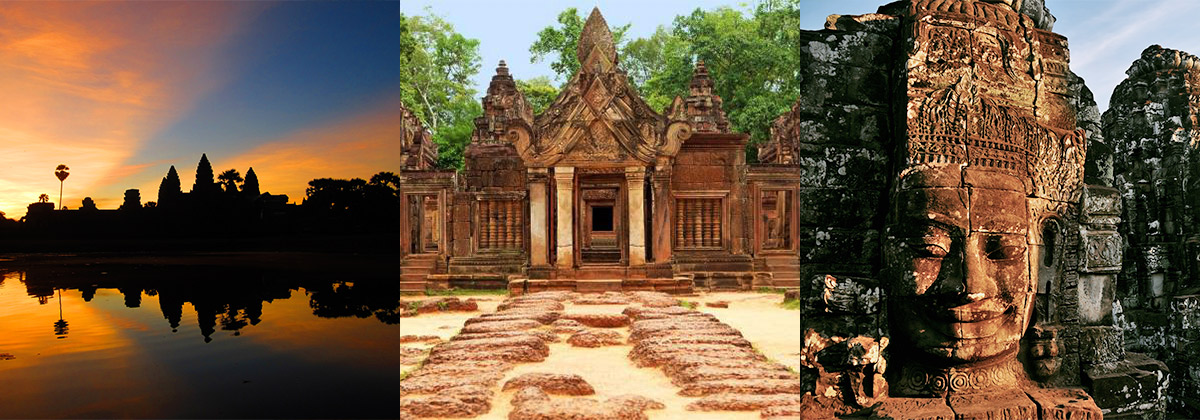
Prasats in a severe state of ruin. Some carving visible. Kutisvara was mentioned in an inscription in connection with the 9th century during the reign of Jayavarman II, the founder of the Angkor Empire. The central tower displays Preah Ko style. The outer towers are in Pre Rup ...
Kutishvara, also spelt Khutishvara or Kutisvara or Kutishwara etc., is a minor Angkor monument just north of Banteay Kdei and east of Ta Prohm, it is about 250 metres north to the Small Circuit road. The Kutishvara temple towers are situated in a very small grove surrounded by farmland. The Sanskrit word Kutishvara may be the original name of the sanctuary, because a site of Kuti is mentioned in the famous Sdok Kok Thom inscription from the eleventh century.
As with Ak Yum (see earlier post), Kutisvara temple is another of those minor Angkor temples who’s historical importance is equalled by it’s lack of tourist cachet! The 3 unspectacular and ruined brick towers are never going to get 5* in any temple guide but it is considered by many historians to be the oldest temple in the entire central Angkor area, so as such one of the most significant from an archeological points of view.
The central of the 3 towers is thought to date to the late 8th or early 9th century and the reign of Jayarvarman II making Kutisvara, (sometimes spelt Kutishvara), contemporary with the oldest sites at Rolous, (e.g. Trapaeng Phong), and the western end of the Western Baray, (Ak Yum etc). but the earliest in the central part of the historical park. The temple is situated between the south eastern corner of Ta Prom and the north western angle of Sra Srang – lying just off, but still visible from, the north side of the road running between Ta Prom and Banteay Kdei.)
Kutishvara, also spelt Khutishvara or Kutisvara or Kutishwara etc., is a minor Angkor monument just north of Banteay Kdei and east of Ta Prohm, it is about 250 metres north to the Small Circuit road. The Kutishvara temple towers are situated in a very small grove surrounded by farmland. The Sanskrit word Kutishvara may be the original name of the sanctuary, because a site of Kuti is mentioned in the famous Sdok Kok Thom inscription from the eleventh century.
Parts of this small temple may have been built already by the legendary empire founder Jayavarman II around 800. But more probably the central tower is a monument in the Preah Ko style of Roluos-king Indravarman I in the second half of the ninth century. However, Kutishvara is the oldest monument inside the Archaeological Park (ticket area) of Angkor. Close to Angkor, only Ak Yum at the West Baray, 10 kilometres outside the Archaeological Park, was built earlier than Kutishvara, as it is ascribed to Jayavarman II (944-68). Inside Angkor, the sparce ruins of Kapilapura possibly originate from the same period and are part of a disappeared settlement which was even earlier than Kutishvara.
Kutishvara only consists of poor (and still partly buried) remnants of three Prasat towers. Earlier on, they were probably surrounded by a moat. The three towers are arranged from north to south on a single earth bank, forming a so-called longitudinal temple.
The basis of the older central Prasat is of brick, those of the other two are laterite. The central tower is better preserved, the two adjacent brick towers are ruined. The original temple was dedicated to Shiva, symbolized by a Linga on a pedestal. But most probably the extensions of the mid tenth century served to worship the Hindu trinity, viz. Shiva with Brahma and Vishnu. The reason for this assumption is: A stone re-used for the construction of the nearby Buddhist Bantay Kdei temple mentions a dedication to Shiva and the erection of statues of Vishnu and Brahma by a priest called Shivacharya, who was engaged by Rajendravarman II. A statue of Brahma on a round lotus pedestal was found in the southern shrine of Kutishvara.
The central tower from the ninth century has octagonal stone colonettes and an eroded stone lintel in situ. Two later Pre Rup style lintels, lying on the ground nearby, are much better preserved, they belonged to the two the adjacent towers from the tenth century. The northern lintel shows an early version of the frequently illustrated "churning of the milk ocean". The lintel in front of the south tower depicts the sitting four-headed Brahma surrounded by worshippers. Relief images of Brahma usually only show three heads, as in this case, not the head at the back. Originally Brahma had five heads, but he lost the upper one, when he was beheaded by the angered Shiva.
The morning is better for a visit of Kutishvara. Nobody will ask you for a ticket here. But you should not visit this area deep inside the archaelogical zone without one, and you will need the Angkor ticket at the famous temples nearby, Banteay Kdei and Ta Prohm.

Explore the remote temples of the Khmer Empire on a full-day tour of Banteay Srey and the early Angkor temples of Roluos from Siem Reap. Admire bas reliefs, and sandstone carvings. Return to the city ...

Especially designed for family to Cambodia. We will prepare a slow-paced tour itinerary for you and your children and take care of all the details to make sure you will have a comfortable biking tour ...
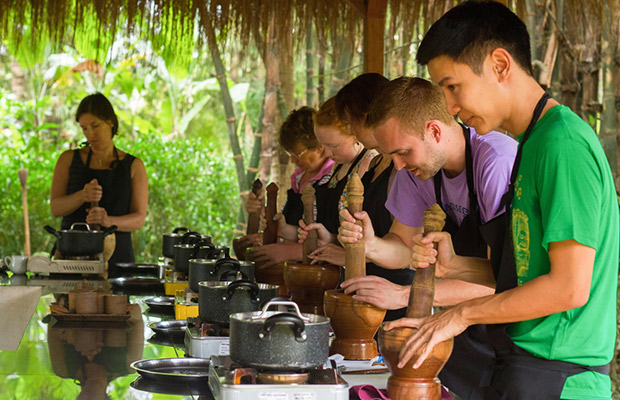
Few visitors to Cambodia witness rural Khmer life in such details, let alone enjoy this level of one-to-one time with a Cambodian Family in their own home. Our unique' village explorer' trip not only ...

This is the see-it-all tour, taking in the very best of Cambodia. Explore the jungle temples of Angkor; bathe in the healing pools at sacred Kulen Mountain; observe local life on the Tonlé Sap lake; ...
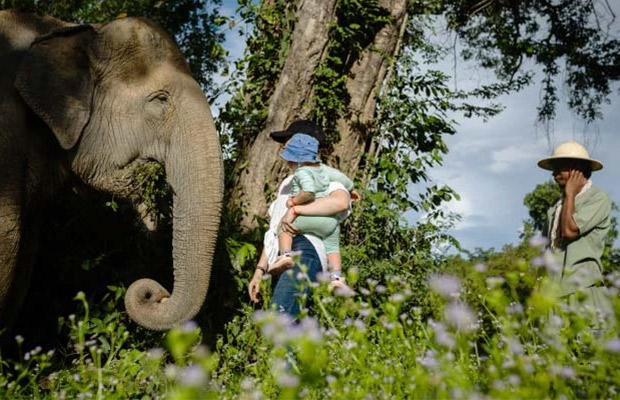
The Kulen Elephant Forest is a haven where retired elephants can interact freely, and are treated with the greatest care and attention. At the reserve, there are no tricks, no riding, and the ...

Phnom Kulen Mountain is the most sacred mountain in Cambodia where many Khmers like to hang out in the weekends. It is a nice place for you and your kids to have fun for there are clean waters and ...

Sivutha Bulvard, Sangkat Svay Dangkum, Siem Reap, Cambodia
Best Location!
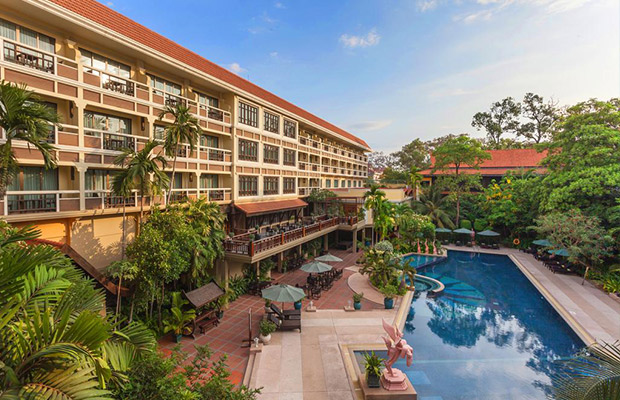
Prince D'Angkor Hotel & Spa sits in Siem Reap’s Old French Quarter, a 10-minute walk from Pub Street, Old Market and the Angkor Night Market. Featuring traditional Cambodian décor, guests enjoy access to the outdoor saltwater pool, spa baths, sauna/steam room and fitness centre. Free WiFi is offered in all of the resort's rooms.
Prince D'Angkor Hotel & Spa is less than 5 minutes’ walk to shops, restaurants and bars. Siem Reap Angkor International Airport is around 15 minutes’ drive away. The property offers complimentary one-way transfer services from the airport or bus station.
Featuring wooden flooring and Khmer-style furnishings, the air-conditioned rooms at Prince D'Angkor Hotel & Spa are fitted with an electric kettle, slippers and dental kits. Bathrooms are equipped with a bathtub and a separate shower. Some rooms offer a private balcony while all rooms feature a choice of either views of the pool or city. Rooms feature a flat-screen satellite TV with international channels.
Guests can enjoy a massage at Opal Health Club & Spa, which also offers a sauna, steam room and gym. The hotel offers the convenience of a 24-hour front desk providing tour arrangements, luggage storage and currency exchange. Staff are able to converse in English, French, Japanese and Chinese.
The property's in-house restaurant, Blue Diamond serves up a selection of Khmer dishes and feature an international buffet, while Emerald Grill Room offers fine dining. Afternoon tea can be enjoyed at the Sapphire Piano Lounge, with live music in the evenings.
This is our guests' favourite part of Siem Reap, according to independent reviews.
This property also has one of the best-rated locations in Siem Reap! Guests are happier about it compared to other properties in the area.
Couples particularly like the location — they rated it 9.1 for a two-person trip.
We speak your language!

Trapaing Ses Village, KokChork Commune, Siem Reap, Cambodia
Best for Couple!
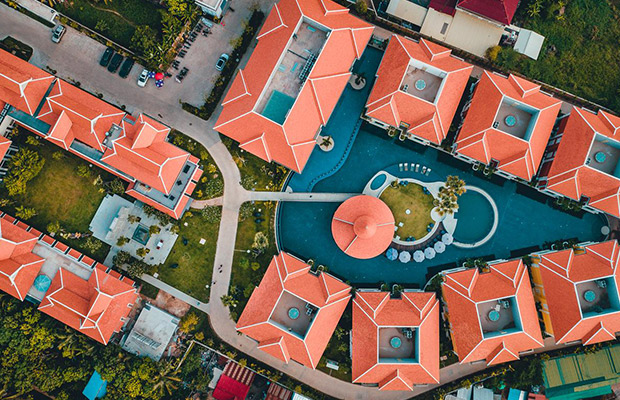
Palm Village Resort features bungalow accommodations with bamboo and wood furnishings, 2.5 mi from Angkor Wat. Guests enjoy access to the outdoor swimming pool. Free WiFi is available in all rooms.
Palm Village Resort and Spa is a 15-minute drive from Angkor International Airport. The property offers complimentary airport pickup services.
Bungalows at Palm Village are surrounded by tropical greenery and feature a private balcony. They are simply furnished with a mini-bar, TV and telephone. Private bathrooms have hot/cold shower facilities.
Guests can relax with massages and steam room at the spa or explore Siem Reap with the bicycle rental available. The hotel also provides ticket and laundry service, as well as car hire.
A variety of authentic Khmer, Asian and vegetarian dishes can be enjoyed at Palm Village’s restaurant. Breakfast is served daily at the open-air restaurant.
We speak your language!
Sok San Road, Steung Thmei, Siem Reap, Cambodia
Best for Traveller!
One of our top picks in Siem Reap – and a guest favourite.
Located in the heart of Siem Reap, Golden Temple Boutique offers 19 suites tastefully designed in a handcrafted stonework decor. Just 100 m from Angkor Night Market and 300 m from the vibrant Pub Street, guests can enjoy food at an in-house restaurant or relax at the spa. Free WiFi is offered throughout the property.
Every suite comes with air conditioning, a flat-screen TV with satellite channels and a tea/coffee making facilities. Certain suites offer a seating area and a private balcony where guests can enjoy views of the city. All suites feature an en suite bathroom fitted with shower facilities. Extras include bathrobes, slippers and free toiletries.
A 24-hour front desk can be approached for currency exchange, tour arrangements and ticketing services. Guests can enjoy swimming at the outdoor pool or indulge in massage treatments at Malis Spa. Other facilities include a business centre and a library.
A selection of Cambodian or International dishes can be enjoyed at Damnak AHA Restaurant. Guests can also have drinks at the on-site bar.
Golden Temple Boutique offers free use of bicycles for guests wishing to explore the surrounding area. The UNESCO World Heritage Site of Angkor Wat is 7 km away from the property, while Siem Reap - Angkor International Airport is 9 km away. The hotel offers complimentary round-trip transfer services from/to the airport, a bus station or a ferry dock.
This is our guests' favourite part of Siem Reap, according to independent reviews.
This property also has one of the best-rated locations in Siem Reap! Guests are happier about it compared to other properties in the area.
Couples particularly like the location — they rated it 9.8 for a two-person trip.
This property is also rated for the best value in Siem Reap! Guests are getting more for their money when compared to other properties in this city.
We speak your language!
Siem Reap City Center, Psar Kraoum Road, Siem Reap, Cambodia
Best Value!
Memoire Palace Resort & Spa offers guests relaxing accommodation in Siem Reap with private balcony overlooking the swimming pool and the garden. The resort features free WiFi access, freshwater and saltwater swimming pools and a fitness centre. Complimentary roundtrip airport transfer is available at the property.
Each suite is fitted with wooden flooring, a wardrobe, fruit basket, coffee/tea facilities and bottles of water. En suite bathroom comes with a hairdryer, bathrobes, slippers and free toiletries.
Guests can indulge in spa treatments and make use of a hot tub, sauna and yoga room. Speaking English, French, Chinese and Thai, staff at a 24-hour front desk can assist guests with practical travel information on the area.
A buffet breakfast is served each morning at the property. Guests can dine in at the in-house restaurant, which specialises in international and local cuisine and also offers dairy-free options.
Memoire Palace Resort & Spa is located just 5 minutes from the Siem Reap's city centre, 17 minutes from Siem Reap International Airport and 18 minutes from the Angkor Wat temples.
Couples particularly like the location — they rated it 8.4 for a two-person trip.
This property is also rated for the best value in Siem Reap! Guests are getting more for their money when compared to other properties in this city.
We speak your language!
Charles de Gaulle Blv, Khum Svay Dan Kum, Siem Reap, Cambodia
Best Value!
Raffles Grand Hotel d'Angkor offers elegant accommodation in the heart of Siem Reap, within a 5-minute drive of the market centre. It features a lap pool, fitness centre, and spa. WiFi is free throughout the hotel.
Raffles Grand Hotel is a 10-minute drive from both Angkor Wat and Siem Reap International Airport. It is also close to numerous temples.
Featuring private terraces, the air-conditioned rooms come with cable TV, tea/coffee making facilities and a safety deposit box. Each room has an attached bathroom with a bathtub and shower.
Activities offered by Raffles Grand Hotel include yoga and Khmer dance. The hotel provides 24-hour room service and 24-hour butler service.
Raffles Grand Hotel d'Angkor has 4 dining options offering French, Cambodian and Asian dishes.
This is our guests' favourite part of Siem Reap, according to independent reviews.
This property also has one of the best-rated locations in Siem Reap! Guests are happier about it compared to other properties in the area.
Couples particularly like the location — they rated it 9.3 for a two-person trip.
We speak your language!

Phum Wat Damnak, Siem Reap, Cambodia
Best for Traveller!
One of our bestsellers in Siem Reap!
Dream Mango Villa offers accommodation in Siem Reap. Guests can enjoy the on-site restaurant.
Each room has a flat-screen TV. All rooms offer a pool and garden view. The rooms are fitted with a private bathroom. Extras include bathrobes and free toiletries.
There is a 24-hour front desk at the property.
Pub Street is 900 m from Dream Mango Villa, while Angkor Wat is 7 km away. The nearest airport is Siem Reap - Angkor International Airport, 9 km from the property.
This is our guests' favourite part of Siem Reap, according to independent reviews.
This property also has one of the best-rated locations in Siem Reap! Guests are happier about it compared to other properties in the area.
Couples particularly like the location — they rated it 9.4 for a two-person trip.
This property is also rated for the best value in Siem Reap! Guests are getting more for their money when compared to other properties in this city.
We speak your language!
Being the locals, we know the true value of our land. We always listen and arrange everything as your desire. Please kindly send us whatever about your trip,we will send you best offers quickly.






Guest Name: Mrs. Anaïs JAA
Country: France
City: Phnom Penh
N.of Person: 4 pax
Travel date: 2026-10-31
Booked: Kirirom National Park and Eco-Tourism
Tour Style:
Duration: