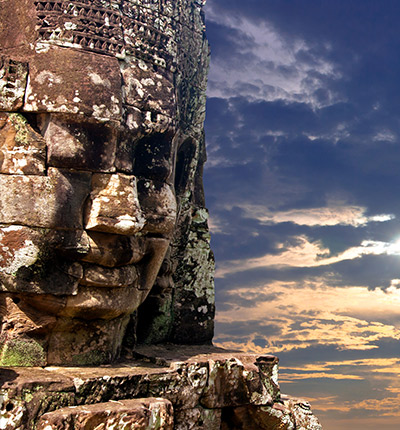
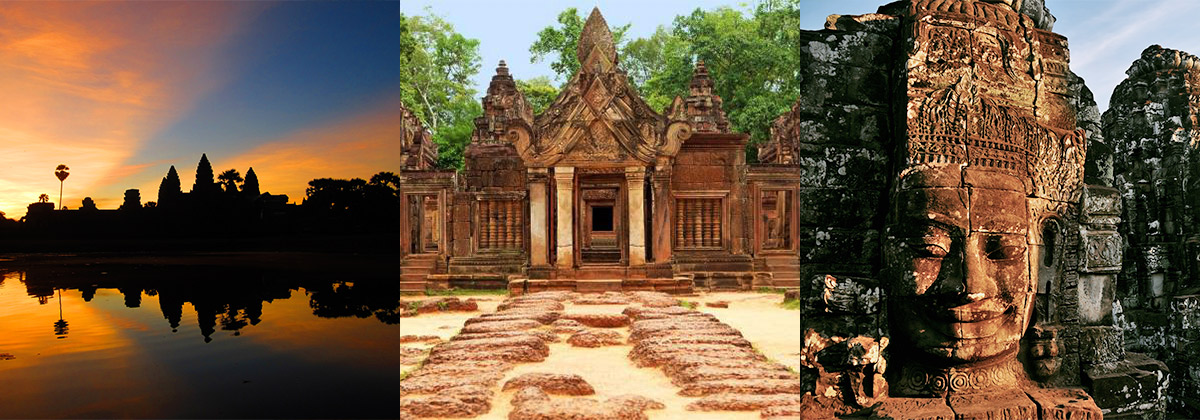
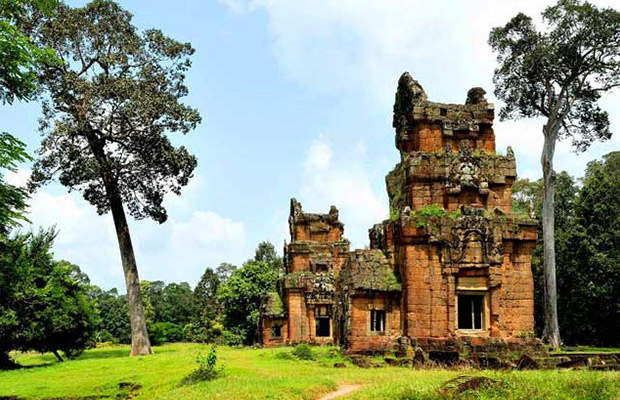
Prasat Suor Prat is a series of twelve towers spanned north to south lining the eastern side of royal square in Angkor Thom, near the town of Siem Reap, Cambodia. The towers are made from rugged laterite and sandstone. The towers are located right in front of Terrace of the Elephants and Terrace of the Leper King, flanking the start ...
Twelve nearly identical laterite/sandstone towers that stand opposite and parallel to the Terrace of the Elephants. The artistic and architectural style of the towers is unique, defying easy classification and dating. Construction may have begun under Jayavarman VII, but the towers do not display the classic Bayon-style characteristics. It has been argued that they may be post-Bayon or perhaps much earlier, as early the 11th century. The original function of the towers is a matter of debate but in the 13th century classic, "Customs of Cambodia," Chinese emissary to Angkor, Zhou Daguan, gives a romantic but dubious first hand account of their function.
Prasat Suor Prat is a series of twelve towers spanned north to south lining the eastern side of royal square in Angkor Thom, near the town of Siem Reap, Cambodia. The towers are made from rugged laterite and sandstone. The towers are located right in front of Terrace of the Elephants and Terrace of the Leper King, flanking the start of the road leading east to the Victory Gate, on either side of which they are symmetrically arranged. Their function remains unknown.
The current tower's name in Khmer means "The towers of the tight-rope dancers", a romantic name derived from local belief assuming that they were used to support a high wire stretched between them for acrobatics purpose during royal festivals. This belief however, is irrelevant. Zhou Daguan describes in his records that the towers are used to settle disputes among Angkorian people.
The temple was possible built during the reign of Indravarman II.
A group of twelve small laterite towers, dating from the reign of king Jayavarman VII, the end of the 12th-beginning of the 13th century AD, stand facing the
Terrace of the Elephants, at the edge of the jungle on the east side of the Victory Gate. To the local people, however, they were known as Prasat Sour Proat, “the towers of the tight rope walkers,” because the performers stretched their high wires between them. However, a Chinese Diplomat Zhou Daguanstated that “the towers were places where justice was dispensed.”
Among the twelve towers, the structures identified as N1 tower and N2 antechamber were in danger of collapse and were reconstructed in 2001-2005 by JSA (Japanese Government Team for the Safeguarding of Angkor) and APSARA.

Explore the remote temples of the Khmer Empire on a full-day tour of Banteay Srey and the early Angkor temples of Roluos from Siem Reap. Admire bas reliefs, and sandstone carvings. Return to the city ...
Your honeymoon vacation is memorable if you choose beautiful Cambodia country with its culture, history and lifestyle. Siem Reap is probably the most visited place with the temple complex. Besides, ...
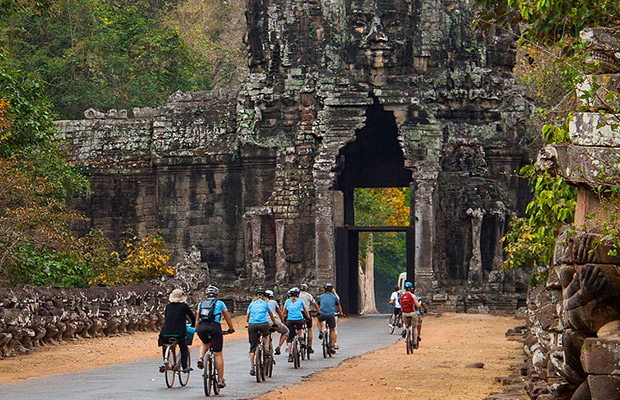
Full day cycling through the back roads to catch a glimpse of authentic rural Cambodian life in Siem Reap, view magnificent palm trees, broad paddy fields, and scenes of life by the river as you ride ...

Siem Reap Dirt Bike Tours gives you the chance to visit the most remote temples that very few people get to see. This tour combines some of the best trail riding in the country with the opportunity ...

Take a stroll through Siem Reap's inner core and experience this small, yet booming tourist town. Begin your tour with a visit to the Royal Gardens and Residence before making your way through the ...

Sky Venture Microlight flights range from 15 min to one hour, and can include many temple complexes as well as the Tonle Sap. This type of small plane only holds a pilot and one guest, and offers a ...

#311, Group 9, Mondol 1, Svay Dangkom, Siem Reap, Cambodia
Best Price!
Nestled amidst a private garden fitted with a terrace, Uncle Sam Villa offers quiet accommodation in the heart of Siem Reap. It features free WiFi throughout the entire property and an in-house restaurant.
Angkor Breeze Central Villa is a 6-minute walk from Pub Street and the Old Market, while it takes a minute to walk to the riverside. Angkor Wat is 6 km from Angkor Breeze Central Villa. The nearest airport is Siem Reap - Angkor International Airport, 8 km from the property.
Air-conditioned rooms are fitted with private balconies and the seating area is fitted with a flat-screen cable TV. Every room comes with a private bathroom equipped with shower facilities and a hairdryer. For your comfort, you will find slippers and free toiletries.
Guests can approach the multilingual staff at the property's 24-hour front desk for car rentals, tour and ticketing services.
This is our guests' favourite part of Siem Reap, according to independent reviews.
This property also has one of the best-rated locations in Siem Reap! Guests are happier about it compared to other properties in the area.
Couples particularly like the location — they rated it 9.6 for a two-person trip.
This property is also rated for the best value in Siem Reap! Guests are getting more for their money when compared to other properties in this city.
We speak your language!

Upper East River Road, North of Wat Polanka, Siem Reap, Cambodia
Best Deal!
One of our bestsellers in Siem Reap! Featuring a unique blend of Cambodian and ancient Khmer wooden houses, Maison Polanka is equipped with an infinity-edge swimming pool and free Wi-Fi access. The hotel also provides free shuttle services to and from the Airport.
Located a 15-minute drive to the historical Angkor Wat Temple, the hotel is also 15 km away from Siem Reap International Airport and a 10-minute drive from Siem Ream Town – a lively pub street.
Luxuriously furnished rooms are equipped with air-conditioning, a sofa, a seating area and a flat-screen TV with cable channels. Private bathrooms include shower facilities and free toiletries.
Guests can indulge in a traditional massage or cycling and horse-riding activities. A 24-hour front desk can assist with laundry/ironing services as well as room service. Breakfast can also be served in the room upon request.
Located by the poolside an in-house restaurant – The Sala, serves fresh Cambodian cuisines. Guests can also lounge by the bar with a cocktail in hand.
This is our guests' favourite part of Siem Reap, according to independent reviews.
This property also has one of the best-rated locations in Siem Reap! Guests are happier about it compared to other properties in the area.
Couples particularly like the location — they rated it 9.2 for a two-person trip.
This property is also rated for the best value in Siem Reap! Guests are getting more for their money when compared to other properties in this city.
We speak your language!
Old Market Area, Wat Damnak Road, Wat Damnak Village, Sala Kamreuk Commune, Siem Reap, Cambodia
Best for Couple!
Set in Siem Reap, 400 m from King's Road Angkor, Moon Flower Residence provides accommodation with an outdoor swimming pool. Among the facilities of this property are a restaurant, free shuttle service and a 24-hour front desk, along with free WiFi. A tour desk can provide information on the area.
At the hotel, rooms include a desk and a flat-screen TV. Rooms come complete with a private bathroom fitted with a hot tub and free toiletries, while certain rooms at Moon Flower Residence also boast a seating area. All units will provide guests with a toaster.
A continental breakfast is available daily at the accommodation.
Moon Flower Residence offers a terrace. You can play billiards at the hotel, and bike hire is available.
Moon Flower Residence provides a dry cleaning service, as well as business facilities like fax and photocopying.
Pub Street is 600 m from the accommodation. Siem Reap - Angkor International Airport is 13 km from the property.
This is our guests' favourite part of Siem Reap, according to independent reviews.
This property also has one of the best-rated locations in Siem Reap! Guests are happier about it compared to other properties in the area.
Couples particularly like the location — they rated it 9.4 for a two-person trip.
This property is also rated for the best value in Siem Reap! Guests are getting more for their money when compared to other properties in this city.
We speak your language!
Wat Damnak village, Old Market Areas, Siem Reap, Cambodia
Best Seller!
Featuring 3-star accommodation, Golden Banana Residence is set in Siem Reap, 400 m from King's Road Angkor and 600 m from Pub Street. Featuring an outdoor swimming pool, the 3-star hotel has air-conditioned rooms with free WiFi, each with a private bathroom. The hotel offers pool views and a barbecue.
The rooms at the hotel are equipped with a seating area and a flat-screen TV with satellite channels. All units will provide guests with a desk and a coffee machine.
A continental breakfast is available every morning at the property. There is an in-house restaurant, which serves Chinese cuisine and also offers vegetarian and dairy-free options.
Golden Banana Residence offers a hot tub. You can play billiards at the accommodation, and the area is popular for cycling.
Guests can rent a car or make advantage of the business centre. When guests need guidance on where to visit, the reception will be happy to provide advice.
Angkor Wat is 7 km from Golden Banana Residence. Siem Reap - Angkor International Airport is 13 km from the property.
This is our guests' favourite part of Siem Reap, according to independent reviews.
This property also has one of the best-rated locations in Siem Reap! Guests are happier about it compared to other properties in the area.
Couples particularly like the location — they rated it 9.6 for a two-person trip.
This property is also rated for the best value in Siem Reap! Guests are getting more for their money when compared to other properties in this city.
We speak your language!
Siem Reap City Centre, Oknha Oum Chhay Street, Siem Reap, Cambodia
Breakfast Included
Hotel Somadevi Angkor Boutique and Resort offers modern and comfortable accommodation in the heart of Siem Reap. It features an outdoor swimming pool and guests can enjoy meals at the in-house restaurant. Free WiFi is available in public areas.
It is 750 m to the vibrant Pub Street and Old Market, while Angkor Night Market is 800 m away. Angkor Wat is a 6.1 km drive from Hotel Somadevi Angkor Boutique and Resort. The nearest airport, Siem Reap International Airport is 8.5 km from the property. The property offers complimentary two-way transfers from the airport or bus station.
Elegantly furnished, air-conditioned rooms come with parquet flooring, ironing facilities, in-room safe and a flat-screen TV with cable channels. A minibar, refrigerator and electric kettle are also included. The en suite bathroom is equipped with hairdryer, bathrobes and free toiletries.
Guests can approach the 24-hour front desk for currency exchange, tour arrangements ticketing, concierge and laundry services. At Hotel Somadevi Angkor Boutique and Resort, guests may rent a bicycle, car or Tuk Tuk to explore the area. Alternatively, guests can indulge in spa treatments at Aloe Spa
Housing a restaurant and bar, the property serves a spread of local cuisine, Asian and Western dishes. Special diet meals can also be prepared upon request.
This is our guests' favourite part of Siem Reap, according to independent reviews.
This property also has one of the best-rated locations in Siem Reap! Guests are happier about it compared to other properties in the area.
Couples particularly like the location — they rated it 9.2 for a two-person trip.
We speak your language!
Krom 6, Phoum Sala Kanseng, Sangkat Svay Dangkum, Siem Reap, Cambodia
Breakfast Included
One of our top picks in Siem Reap – and a guest favourite.
Nestled within private gardens, The Thirdfold Residence offers modern and elegantly-furnished accommodation away from the hustle and bustle of Siem Reap. It features an outdoor swimming pool and guests can enjoy meals at the in-house restaurant. Free WiFi is available throughout the property.
It is 1.5 km to the vibrant Pub Street and Old Market. Angkor Wat is 5 km from The Thirdfold Residence, while Angkor National Museum is 800 m away. Siem Reap - Angkor International Airport is 6.4 km from the property.
Featuring contemporary-style interiors and architecture, every room at this hotel is air conditioned and opens up to views of the garden, swimming pool or city. Rooms are fitted with a flat-screen TV and an electric kettle. En suite bathrooms include a bathtub, slippers, toothbrushes and free toiletries.
Guests can approach the 24-hour front desk for currency exchange, tour arrangements, ticketing and concierge services. Guests can rent bicycles to explore the surrounding area. Union Pay is accepted at the property.
Veha Restaurant serves up authentic Khmer cuisine as well as a variety of Western and Indochinese-inspired dishes.
Couples particularly like the location — they rated it 8.7 for a two-person trip.
This property is also rated for the best value in Siem Reap! Guests are getting more for their money when compared to other properties in this city.
We speak your language!

Being the locals, we know the true value of our land. We always listen and arrange everything as your desire. Please kindly send us whatever about your trip,we will send you best offers quickly.






Guest Name: Mrs. Anaïs JAA
Country: France
City: Phnom Penh
N.of Person: 4 pax
Travel date: 2026-10-31
Booked: Kirirom National Park and Eco-Tourism
Tour Style:
Duration:



.jpg)