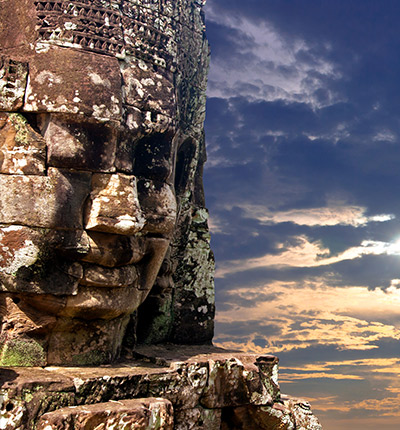
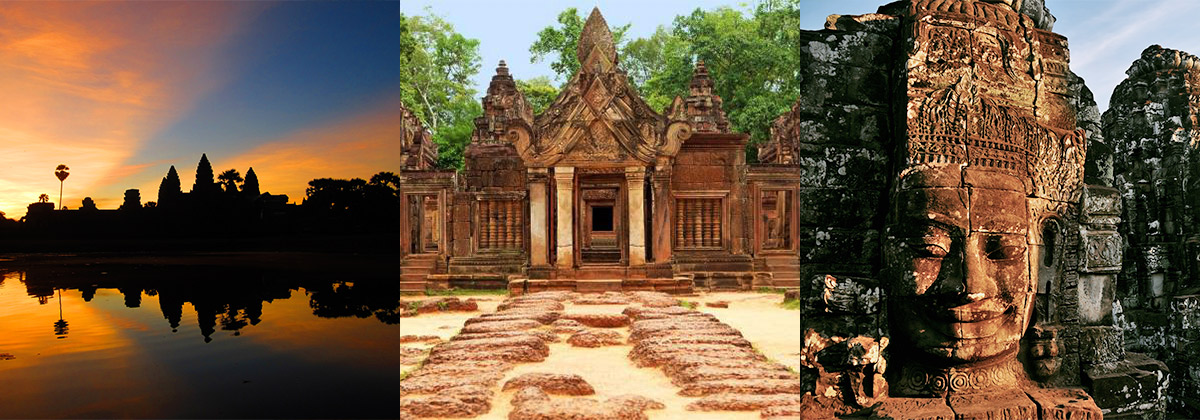
Ta som, this small temple, like a miniature simplified version of Ta Prohm or Banteay Kdei, owes its Charm to a combination of remoteness, semi ruined state, and face- towers. It lics at the foot of the E dyke of the baray ayatataka, slightly N of the axis formed by neak Pean and Preah Khan to the W. It is perhaps the temple erferren to in the Preah Khan inscription as Gaurasrigajaratna- the Jewel of Propitious white Elephant, and it should then have housed 22 divinities.
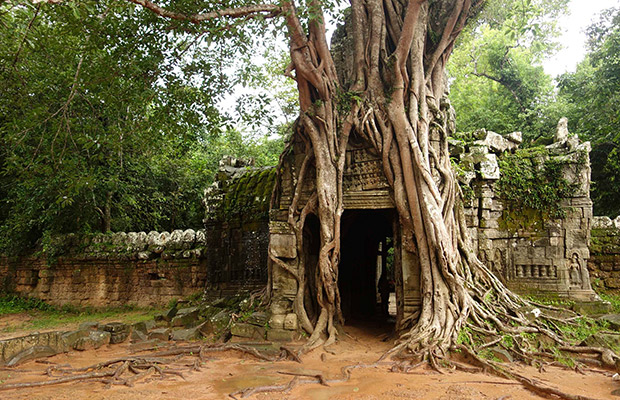
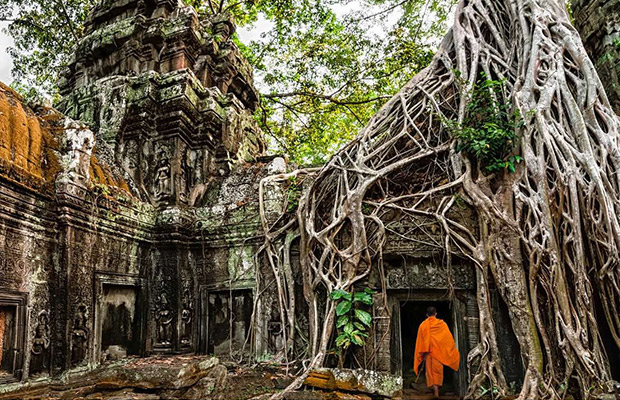
Ta Som, which stands to the east of Preah Neak Poan, is one of the late-12th-century Buddhist temples of prolific builder Jayavarman VII. The most impressive feature at Ta Som is the huge tree completely overwhelming the eastern gopura, providing one of the most popular photo opportunities in the Angkor area.
Small, classic Bayon-style monastic complex consisting of a relatively flat enclosure, face tower gopuras and cruciform interior sanctuaries much like a miniature version of Ta Prohm. Many of the carvings are in good condition and display particularly fine execution for late 12th century works. Take note of the devata carvings which show an uncommon individuality. A huge tree grows from the top of the eastern gopura. It is destroying the gate but it is a photo classic. Best photographed in the afternoon. Ta Som is the most distant temple on the Grand Circuit.
Prasat Ta Som located in the east of Nean Pean. The entry and exit to Ta Som can only be access from east entrance. It was built in the end of the 12th century, dedicated to the father of the king (Buddhist), replica to Bayon style of art.
Ta Som has not been restored. It is a small quiet temple and affords a delightful visit.
In the past one of the significant features of Ta Som was the growth of fig trees the faces at the entrance towers. These have been cut from the east tower but they are still visible at the west one.
Ta Som is a single tower monument on one level surrounded by three enclosing walls with entry on the east and west carved with four faces, the face on the right of the east tower (facing the temple) has a beautiful smile. The entry towers are in the shape of a cross with a small room on each side connecting to a laterite wall.
Walk through the first entry tower over a causeway, which crosses a moat and is bordered with serpents and large Garudas. The wall of the second enclosure is in laterite with a sandstone entry tower in the shape of a cross on the east and west sides. The entry towers have windows with balusters on the exterior and proceeded by a porch with pillars.
The next enclosure comprises a laterite and sandstone gallery with corner pavilions, which have molded false doors. Amongst the crumbled heaps of stones in the courtyard are two libraries opening to the west.
Designed to be entered from the east, Ta Som is surrounded by a moat and enclosed by three laterite walls which are broken by two sets of gopura (entrance ways). The gopuras are cross-shaped and contain a small room on each side along with windows containing balusters. The main structure of the gopura are carved with four faces in the Bayon style. The eastern outer gopura has been overgrown by a sacred fig (Ficus religiosa) which has grown down through the blocks that make up the gopura and into the ground. The inner section of the temple consists of a central cruciform sanctuary with porches at each arm surrounded by four corner pavilions. Two small libraries sit on either side of the eastern entrance path.
According to the APSARA Authority who manage the temples in the Angkor Park, little restoration work had been done at Ta Som until the 1950s. At this time some propping of structures that were near collapse was carried out. After the WMF added Ta Som to their project, the WMF team began to document and interpret the site and carry out emergency stabilization of fragile structures and improvement to visitor flow around the monument.[4] In 2007, WMF and the APSARA Authority conducted clearing and documentation works that allowed the temple to be accessed from all four sides. Many sandstone blocks were repaired and this allowed the reconstruction of the North Central Fronton of the North Gopura.

Visit Angkor Wat, Banteay Srei, Bayon, Beng Mealea, Koh Ker, Ta Prohm, Tonle Sap boat trips, Phnom Kulen Waterfall, Preah Vihear and Sopheak Mitt ...
Ta Prohm is the modern name of the temple at Angkor, Siem Reap Province, Cambodia, built in the Bayon style largely in the late 12th and early 13th centuries and originally called ...

Get a glimpse of life in a traditional Cambodian floating village on this full-day tour by bus, bike and boat from Siem Reap. Cycle through the countryside, take a scenic cruise through a flooded ...

Phnom Kulen Mountain is the most sacred mountain in Cambodia where many Khmers like to hang out in the weekends. It is a nice place for you and your kids to have fun for there are clean waters and ...

We perform the Angkor Small tour in reverse direction so we avoid the big crowds as much as possible. Instead of only the big well known temples we also include smaller lesser known ones that many ...
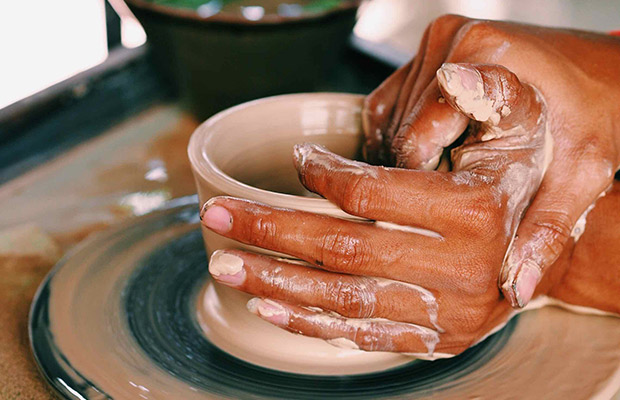
You’ll create your own Cambodian bowl with Khmer carvings to take home with you with and learn from a local artist. Get the chance to express yourself with clay and experience one of Cambodia's ...

Located in Old Market areas, Pub street and Night Market, Siem Reap, Cambodia
Best Deal!
One of our best sellers in Siem Reap!
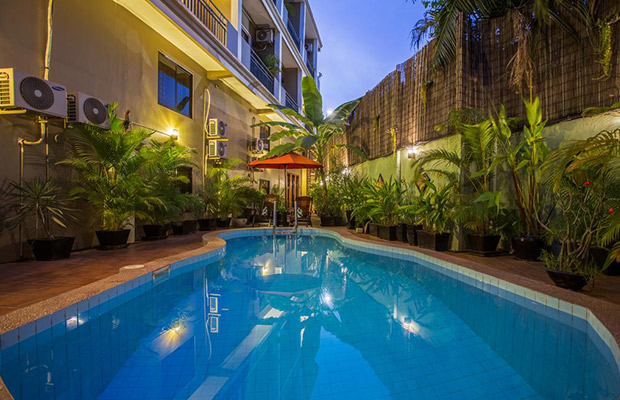
Conveniently located in Old Market Area, La Villa du Bonheur offers elegant and comfortable accommodations with free WiFi access in the entire property. Operating a 24-hour front desk, it features free parking and a free pick-up from the airport and bus station.
The hotel is only 500 m from the lively Pub Street and 300 m from Artisans D'Angkor. The UNESCO World Heritage Site of Angkor Wat is 4.3 mi away, while Siem Reap International Airport is accessible within an 5 mi drive.
Offering garden/pool views from the balcony, air-conditioned rooms come with a desk, wardrobe, electric kettle and a flat-screen TV with satellite channels. The private bathroom has a bathtub or shower, hairdryer, bathrobes and slippers.
Friendly staff at La Villa du Bonheur can assist guests with bicycle/car rentals, luggage storage, laundry and concierge services. Airport transfers can also be arranged upon request at a surcharge. Daily housekeeping service is available.
The in-house alfresco restaurant serves an appetizing selection of local and Western dishes. After-meal drinks can be enjoyed at the bar.
This is our guests' favorite part of Siem Reap, according to independent reviews.
This property also has one of the top-rated locations in Siem Reap! Guests are happier about it compared to other properties in the area.
Couples in particular like the location – they rated it 9.2 for a two-person trip.
We speak your language!

Lub d Cambodia Siem Reap
Breakfast Included
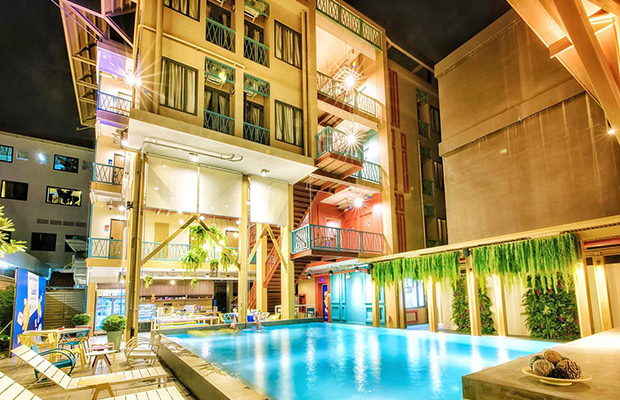
Featuring Khmer-style decor, Lub d Cambodia offers accommodations in the Wat Bo area of Siem Reap. It features an outdoor swimming pool as well as a co-working space and guests can enjoy meals at the in-house restaurant or have a drink at the poolside bar. Free WiFi is available throughout the property.
It is 290 m to Siem Reap Art Center Night Market. The vibrant Pub Street and Old Market are 550 m from Lub d Cambodia Siem Reap, while Angkor Wat is 7.8 km away. The nearest airport is Siem Reap - Angkor International Airport, 9.7 km from Lub d Cambodia Siem Reap. Airport transfers are available at additional charges.
Rooms are air-conditioned. Some units offer en suite bathrooms. Guests staying in the dormitory rooms have access to a personal locker and a shared bathroom.
Guests can approach the 24-hour front desk for luggage storage and tour arrangements. Alternatively, guests can engage in indoor activities at the games area.
This is our guests' favourite part of Siem Reap, according to independent reviews.
This property also has one of the best-rated locations in Siem Reap! Guests are happier about it compared to other properties in the area.
Couples particularly like the location — they rated it 9.4 for a two-person trip.
This property is also rated for the best value in Siem Reap! Guests are getting more for their money when compared to other properties in this city.
We speak your language!

Komay Road , Khum Svay Dangkum, Siem Reap, Cambodia
Best Value!
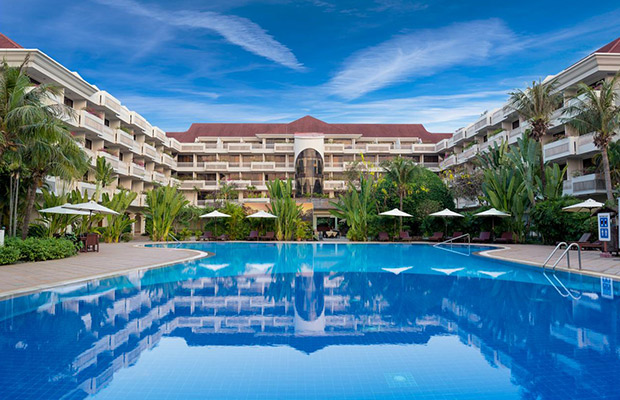
Conveniently located within a 5-minute walk from the center of Siem Reap and a 15-minute drive to the Angkor Temples, Angkor Century Resort & Spa offers luxurious accommodations with an outdoor saltwater swimming pool. Guests can enjoy meals from 5 dining options or celebrate the wedding event or business meeting. Free WiFi is available throughout the property.
It is a 458 m walk to Royal Gardens, while the vibrant Pub Street and Old Market are 0.8 mi away. Angkor Century Resort & Spa is 5.1 mi to Siem Reap International Airport. The property offers complimentary pickup services from the airport.
Well-furnished rooms are air-conditioned and equipped with satellite TV, tea/coffee facilities and a hairdryer. A mini-bar and a fruit basket are provided. Certain rooms and suites offers a balcony with an outdoor sitting area. The private bathroom includes a shower and a bathtub, a hairdryer, a full range of bathroom amenities as well as free toiletries.
Guests can approach the 24-hour front desk for tour arrangements, ticketing and concierge services. Angkor Century Resort & Spa offers car rental services and a barber/beauty shop. For guests who want to buy gifts for friends and family, a souvenir shop is also available.
Angkor Century Resort & Spa offers a variety of Asian and Western food and beverage options, including The Asian Corner Restaurant, Glamor Bar and the Lagoon Pool Bar. The Grand View Coffee House offers an al fresco dining experience.
This is our guests' favorite part of Siem Reap, according to independent reviews.
Solo travelers in particular like the location – they rated it 8.3 for a one-person stay.
We speak your language!

Phum Wat Damnak, Siem Reap, Cambodia
Best for Traveller!
One of our bestsellers in Siem Reap!
Dream Mango Villa offers accommodation in Siem Reap. Guests can enjoy the on-site restaurant.
Each room has a flat-screen TV. All rooms offer a pool and garden view. The rooms are fitted with a private bathroom. Extras include bathrobes and free toiletries.
There is a 24-hour front desk at the property.
Pub Street is 900 m from Dream Mango Villa, while Angkor Wat is 7 km away. The nearest airport is Siem Reap - Angkor International Airport, 9 km from the property.
This is our guests' favourite part of Siem Reap, according to independent reviews.
This property also has one of the best-rated locations in Siem Reap! Guests are happier about it compared to other properties in the area.
Couples particularly like the location — they rated it 9.4 for a two-person trip.
This property is also rated for the best value in Siem Reap! Guests are getting more for their money when compared to other properties in this city.
We speak your language!
St. 20, Wat Bo Village, Salakamroek, Siem Reap, Cambodia, Siem Reap, Cambodia
Best Seller!
One of our top picks in Siem Reap. Nestled within private gardens, Damrei Residence & Spa offers accommodation in Siem Reap. The hotel features an outdoor swimming pool and guests can enjoy a meal at the restaurant or a drink at the bar. Free WiFi is available in public areas.
The vibrant Pub Street is 1 km from Damrei Residence & Spa, while Angkor Wat is 6 km from the property. Siem Reap - Angkor International Airport is 8 km away. The property offers shuttle services at additional charges.
All rooms are equipped with a flat-screen TV. Certain units have a seating area where you can relax. Enjoy a cup of tea while looking out at the garden or city. All rooms come with a private bathroom. Extras include bathrobes, slippers and free toiletries.
Guests can approach the 24-hour front desk for currency exchange, tour arrangements, ticketing and concierge services.Guests can rent bicycles to explore the surrounding area.
This is our guests' favourite part of Siem Reap, according to independent reviews.
Couples particularly like the location — they rated it 8.5 for a two-person trip.
This property is also rated for the best value in Siem Reap! Guests are getting more for their money when compared to other properties in this city.
We speak your language!
National Road No. 6 and Sivatha Street Junction, Siem Reap, Cambodia
Best for Traveller!
Sokha Angkor Resort offers luxurious resort living in central Siem Reap. The hotel offers wellness and relaxation with spa treatments and facilities within its private gardens. The property features an outdoor pool available all year round and an in-house restaurant. It also features a free 15-minute foot massage and free WiFi is available throughout the property.
Pub Street is a short 1 km from Sokha Angkor Resort and the Angkor Wat complex is 6.1 km away from the property. The nearest airport is Siem Reap-Angkor International Airport located 11.2 km from Sokha Angkor Resort. The property offers complimentary airport pickups and shuttle services can be arranged at an additional cost.
Spacious guest rooms and suites are air-conditioned, decorated with traditional ancient and modern Khmer design for comfort. Some rooms offer a private balcony while all rooms feature a choice between city or pool views.
Guests can approach the 24-hour front desk for ticketing and tour services and currency exchange.
Sokha Angkor restaurants and bars serves variety of delicacies ranging from Cambodian, Western, Khmer and Japanese cuisines. The restaurant also caters to special dietary needs upon request.
This is our guests' favourite part of Siem Reap, according to independent reviews.
This property also has one of the best-rated locations in Siem Reap! Guests are happier about it compared to other properties in the area.
Solo travellers particularly like the location — they rated it 8.9 for a one-person stay.
We speak your language!
Sokha Angkor Resort has been welcoming Booking.com guests since 12 Mar 2010.
Hotel chain/brand: Sokha Hotels & Resorts
Being the locals, we know the true value of our land. We always listen and arrange everything as your desire. Please kindly send us whatever about your trip,we will send you best offers quickly.






Guest Name: Mrs. Anaïs JAA
Country: France
City: Phnom Penh
N.of Person: 4 pax
Travel date: 2026-10-31
Booked: Kirirom National Park and Eco-Tourism
Tour Style:
Duration: