The stone monarch is absolutely naked, his hair is plaited and he sits in the Javanese fashion. The legs are too short for the torso, and the forms, much too rounded, lack the strong protuberances of manly muscles; but, however glaring are his defects, he has many beauties, and as a study of character he is perhaps the masterpiece of Khmer sculpture. Whilst his body is at rest his soul boils within him.
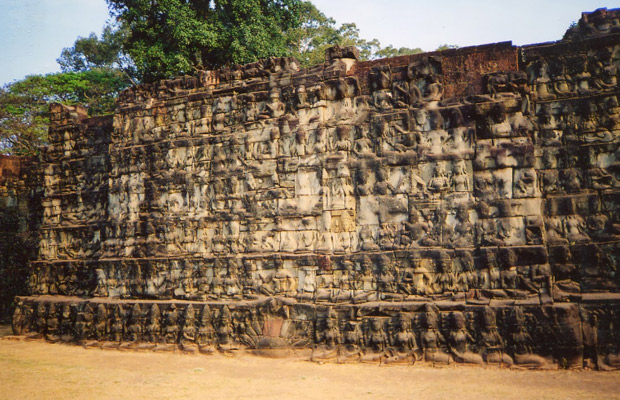
Terrace of the Leper King is located immediately north of the Terrace of the Elephants and it can be accessed from the main road. It was built at end of the 12th century by king Jayavarman VII (reigned 1181-1220)
The Terrace of the Leper King (or Leper King Terrace) (Khmer: ព្រះលានស្តេចគំលង់, Preah Learn Sdech Kunlung) is located in the northwest corner of the Royal Square of Angkor Thom, Cambodia.
It was built in the Bayon style under Jayavarman VII, though its modern name derives from a 15th-century sculpture discovered at the site. The statue depicts the Hindu god Yama, the god of death.
The statue was called the "Leper King" because discolouration and moss growing on it was reminiscent of a person with leprosy, and also because it fit in with a Cambodian legend of an Angkorian king Yasovarman I who had leprosy. The name that the Cambodians know him by, however, is Dharmaraja, as this is what was etched at the bottom of the original statue.
The U-shaped structure is thought by some to have been used as a royal cremation site.
Terrace of the Elephants is an impressive, two and a half-meter tall, 300 meter long terrace wall adorned with carved elephants and garudas spanning the front of Baphuon, Phimeanakas and the Royal Palace area at the heart of Angkor Thom. The northern section of the wall displays some particularly fine sculpture including the five headed horse and scenes of warriors and dancers. Constructed in part by Jayavarman VII and extended by his successor. The wall faces east so the best lighting for photography before noon. The Terrace of the Leper King is at the north end of the Terrace of the Elephants.
The terrace of the Leper King carries on the theme of grandeur that characterises the building during Jayavarman VII's reign. It is faced with dramatic bas-reliefs, both on the interior and exterior. During clearing, the EFEO found a second wall with bas-relief similar in composition to those of the outer wall.
Some archaeologists believe that this second wall is evidence of a late rites, two meters wide of laterite faced with sandstone. It collapsed and a second wall of the materials, two meters wide, was built right in front of it without any of the rubble being cleared. Recently, the EFEO has created a false corridor which allows visitor to inspect the relief on the first wall.
The curious name of this terrace refers to a statue of the Leper King that is on the platform of the terrace. The one you see today is a copy. The original is in the court-yard of the National Museum in Phnom Penh. the figure is depicted in a seated position with his right knee raised, a position some art historians consider to be Javanese-style. Its nakedness is unusual in Khmer art.
Who was the Leper King ? Mystery and uncertainty surround the origin of the name. The long-held theory that Jayavarman VII was a leper and that is why he built so many hospitals throughout the empire has no historical support whatsoever. Some historians think the figure represents Kubera, god of wealth, or Yasovaraman I, both of whom were allegedly lepers.
Another ideas is based on an inscription that appears on the statue in characters of the 14th or 15th century which may be translated as the equivalent of the assessor of Yama, god of death or of judgment. Yet another theory suggests that the Leper King statue got its name because of the lichen which grows on it. The position of the hand, now missing, also suggests it was holding something.
Coedès believes that most of the Khmer monuments were funerary temples and that the remains of kings were deposited there after cremation. He thinks, therefore, that the royal crematorium was located on the Terrace of the Leper King. The statues, then, represents the god of death and is properly situated on the terrace to serve this purpose. Yet another theory derives from a legend in a Cambodian chronicle that tells of a minister who refused to prostrate before the king, who hit him with his sword. Venomous spittle fell on the king, who then became a leper and was called the Leper King thereafter.
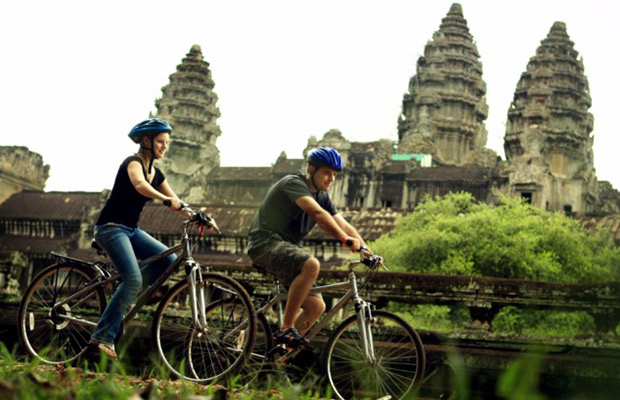
It’s the perfect way for getting around the temples. Taking your bike into the historical park isn’t a problem and you don’t have to pay anything for it. Those faces just rise out of every ...

Flight of the Gibbon is the only Zipline in Cambodia and to top it off we have the absolutely amazing privilege of being located within the UNESCO World Heritage site of The Angkor Archaeological ...

Discover the rich history and culture of the Khmer people with an unforgettable evening out in Siem Reap. This 3-hour evening show at Por Cuisine restaurant includes a delicious dinner of typical ...
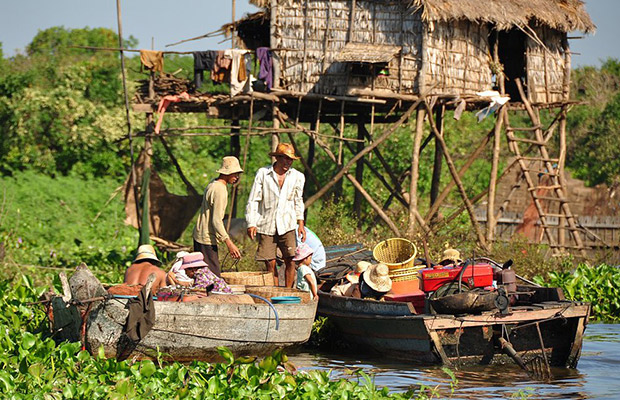
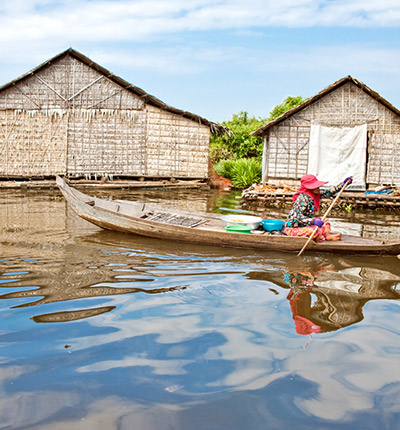
Head off-the-beaten-track and visit the floating village of Kompong Khleang on this 4-hour small-group tour from Siem Reap, including hotel pick-up. Get an insight into rural life as you visit the ...
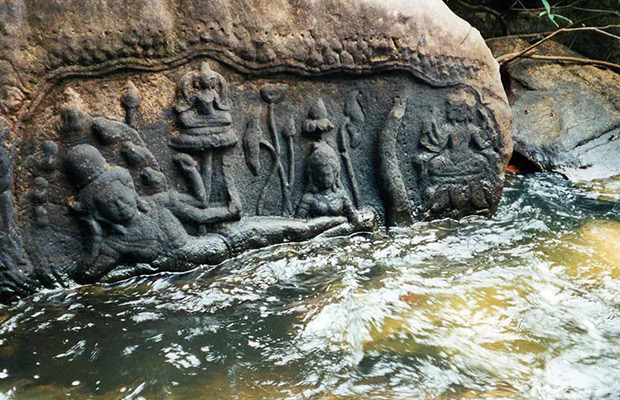
Cambodia's jungle holds a wealth of stunning natural scenery and fascinating ancient history. Led by a private guide, this day-long tour shows you Kbal Spean (“River of a Thousand Lingas), the ...

Pleasure you palate with local delicacies and sweet desserts, savoring the flavor of skewered meat, fried crickets and soft-boiled duck eggs. Numbers are limited to only 12 food-lovers per tour to ...

Taphul Road, Taphul Village, Sangkat Svay Dangkum, Siem Reap, Cambodia
Best for Traveller!
One of our bestsellers in Siem Reap!
Located in Siem Reap and with Royal Residence reachable within less than 1 km, Aroma Angkor Boutique Hotel provides express check-in and check-out, non-smoking rooms, an outdoor swimming pool, free WiFi and a garden. The property features a bar, as well as a restaurant serving American cuisine. The accommodation features a 24-hour front desk, room service and currency exchange for guests.
Guest rooms at the hotel include air conditioning, a flat-screen TV with satellite channels, DVD Player, and a private bathroom with a bath, a hair dryer and free toiletries. All rooms will provide guests with a desk and a kettle.
Continental and American breakfast options are available daily at Aroma Angkor Boutique Hotel.
You can play billiards at the accommodation, and bike hire and car hire are available.
Aroma Angkor Boutique Hotel provides an ironing service, as well as business facilities like fax and photocopying.
Popular points of interest near the hotel include Angkor Night Market, Pub Street and Angkor Trade Centre. The nearest airport is Siem Reap - Angkor International, 12 km from Aroma Angkor Boutique Hotel, and the property offers a free airport shuttle service.
This is our guests' favourite part of Siem Reap, according to independent reviews.
This property also has one of the best-rated locations in Siem Reap! Guests are happier about it compared to other properties in the area.
Couples particularly like the location — they rated it 9.4 for a two-person trip.
This property is also rated for the best value in Siem Reap! Guests are getting more for their money when compared to other properties in this city.
We speak your language!

River Road, Treang Village, Slar Kram Commune, Siem Reap, Cambodia
Best Seller!
One of our top picks in Siem Reap – and a guest favourite.
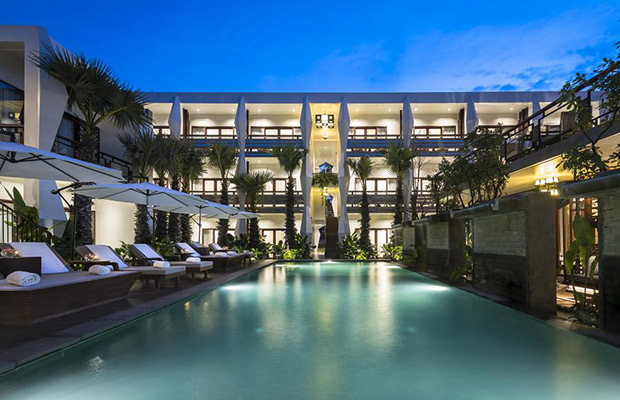
Nestled within tropical hanging gardens, Jaya House River Park offers accommodation away from the hustle and bustle of Siem Reap. It features an outdoor swimming pool and guests can enjoy meals at the in-house restaurant or have a drinks at the bar. Free WiFi is available throughout the property.
Angkor National Museum is conveniently a 750 m walk, while the vibrant Pub Street and Old Market are 2.3 km away. Angkor Wat is 5 km from Jaya House River Park. The nearest airport is Siem Reap - Angkor International Airport, 7 km from the property. The property offers complimentary two-way airport transfers and Tuk Tuk services to the city centre.
Each room at this hotel is air conditioned and comes with a flat-screen TV with cable channels. Some units have a seating area to relax in after a busy day. A terrace or balcony are featured in certain rooms. Every room comes with a private bathroom equipped with a bath and bidet. Extras include bathrobes and slippers.
Guests can approach the 24-hour front desk for currency exchange, tour arrangements, concierge and ticketing services.
This is our guests' favourite part of Siem Reap, according to independent reviews.
This property also has one of the best-rated locations in Siem Reap! Guests are happier about it compared to other properties in the area.
Solo travellers particularly like the location — they rated it 9.6 for a one-person stay.
This property is also rated for the best value in Siem Reap! Guests are getting more for their money when compared to other properties in this city.
We speak your language!
Sekla Villa Road, Siem Reap, Cambodia
Best Value!
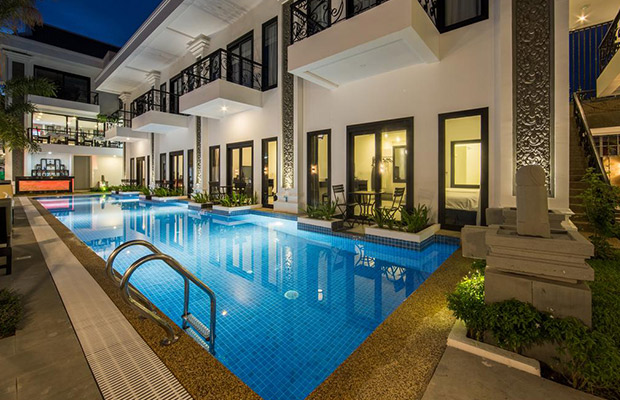
The Khmer House - Secret Oasis is located in Siem Reap and has an outdoor swimming pool and a garden. Boasting free shuttle service, this property also provides guests with a terrace. The accommodation offers a 24-hour front desk.
At the hotel, every room has a balcony. With a private bathroom, rooms at The Khmer House - Secret Oasis also have free WiFi. The rooms at the accommodation are fitted with a seating area.
At The Khmer House - Secret Oasis you will find a restaurant serving Asian cuisine.
Guests can make use of the business centre or rent a car to explore the area.
King's Road Angkor is 2.1 km from the hotel. The nearest airport is Siem Reap - Angkor International Airport, 15 km from The Khmer House - Secret Oasis.
Couples particularly like the location — they rated it 8.2 for a two-person trip.
This property is also rated for the best value in Siem Reap! Guests are getting more for their money when compared to other properties in this city.
We speak your language!

No. 481, Sivatha Street, Vihear Chem Commune, Siem Reap, Cambodia
Breakfast Included
Situated near the Siem Reap River, Siem Reap Riverside Hotel offers well-appointed rooms with free WiFi throughout the property, just 7 km from Angkor Wat. A chlorine and salt-free outdoor pool as well as a rooftop restaurant are available at the property.
Featuring 38 air-conditioned guest rooms, each room is fitted with a flat-screen TV with satellite channels, a refrigerator and a tea/coffee maker. A private bathroom with hot shower facilities is included in all rooms.
You will find a 24-hour front desk at the property. Other facilities include laundry and dry cleaning service and ticketing service at an additional charge. Excursions to local attractions can also be arranged at the property.
The on-site restaurant serves Western and Asian dishes. Great views of Siem Reap River accompany meals.
Siem Reap Riverside Hotel is within a walking distance from shopping, dining and entertainment options. The Night Market and Pub Street are 700 m away from the property. Siem Reap International Airport is a 15-minute drive from the hotel. Airport pickup services can be arranged upon request.
This is our guests' favourite part of Siem Reap, according to independent reviews.
Couples particularly like the location — they rated it 8.3 for a two-person trip.
We speak your language!
Street 22, Siem Reap, Cambodia
Best for Traveller!
Charming Angkor Resort & Spa is situated in Siem Reap, 1.3 km from Pub Street. It features an outdoor pool, a spa and a sauna. Besides housing a restaurant and bar, it also offers complimentary parking. Free WiFi is available throughout the property.
Fitted with a terrace or balcony, each room features a flat-screen TV with cable channels and a wardrobe. The en suite bathroom offers separate bathtub and walk-in shower facilities, toiletries and a hairdryer. Bathrobes and slippers are included.
Guests can head to the 24-hour front desk for assistance with transport rental, luggage storage, laundry and rental of barbecue facilities. Other facilities include a tour desk. Complimentary use of bicycles are available for guests who wish to explore the surrounding area.
Charming Angkor Resort & Spa is 6 km from Angkor Wat and 1.1 km from Royal Residence. Siem Reap - Angkor International Airport is 9 km away.
This property is also rated for the best value in Siem Reap! Guests are getting more for their money when compared to other properties in this city.
We speak your language!
Street 60, Chong Kao Sou Village, Slor Kram Commune, Siem Reap, Cambodia
Best for Traveller!
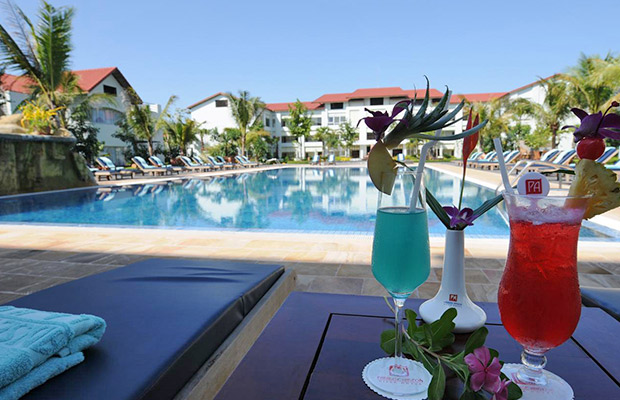
Located just 3.1 mi from Angkor Wat, Paradise Angkor offers accommodations with free Wi-Fi and 24-hour room service in Siem Reap’s city center. It features an outdoor pool, a spa and 4 dining options.
A 5-minute drive from the bus station, Paradise Angkor Villa Hotel is a 20-minute drive from Siem Reap International Airport. Located within 1.9 mi away are the Pub Street and Psar Leu Market. A free pick-up service from the airport or bus station is provided.
Each air-conditioned room at the Paradise Angkor Villa Hotel has a flat-screen TV with cable channels, a safe and mini-bar. Tea/coffee making facilities, bathrobes and slippers are provided.
The Lian Hau Restaurant features Chinese cuisine and Dim Sum. An international buffet is served at The Palm Leaves Restaurant. Drinks are available at The Palm Village Bar.
Guests can workout at the fully equipped fitness room or have a relaxing massage at the spa. Younger guests can enjoy the children's pool.
We speak your language!
Being the locals, we know the true value of our land. We always listen and arrange everything as your desire. Please kindly send us whatever about your trip,we will send you best offers quickly.






Guest Name: Mrs. Anaïs JAA
Country: France
City: Phnom Penh
N.of Person: 4 pax
Travel date: 2026-10-31
Booked: Kirirom National Park and Eco-Tourism
Tour Style:
Duration: